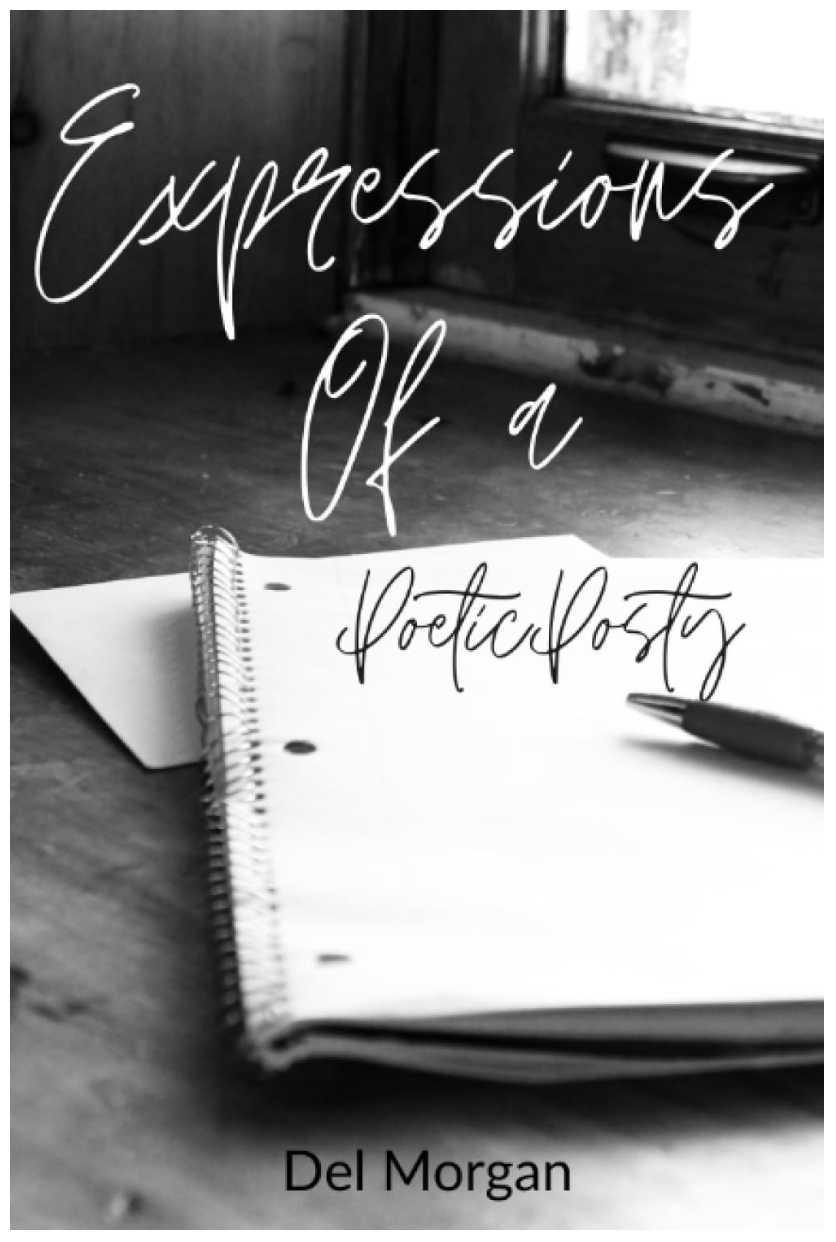
Bobcaygeon resident publishes his first book of poetry, Expressions of a Poetic Posty. Now a retired postal worker, Morgan published the book at his daughter’s insistence.
Books:
Expressions of a Poetic Posty (2020) – One man’s journey through life’s hardships, high points and life-defining moments expressed through the art of poetic writing. A compilation of moments spanning a lifetime, written by a retired postal worker who has deep emotions and puts pen to paper to help himself process all that life throws at him. His writing will take you to these places with him and his beautiful written voice is one that many can relate too.
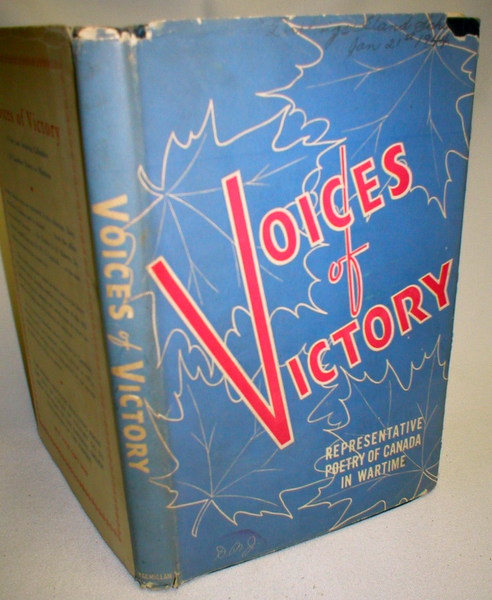
Three Kawartha Lakes writers were the judges for the 1941 anthology, Voices of Victory: representative poetry of Canada in wartime, a publication of the Canadian Authors Association, sponsored by the Seven Seas chapter of the IODE.
The anthology was the idea of the Poetry Group of Toronto. The project was taken on by the Canadian Authors Association, overseen by an editorial board with selection by a committee of judges. The final volume was compiled by Amabel King with a forward by Charles G.D. Roberts.
The purpose of the anthology was two-fold: to send the proceeds from sales to the Canadian Red Cross British Bomb Victims’ Fund, and “to let the poetic genius of Canada and of the Canadian people sound a spiritual challenge to the brutality of enemy despots and tyrants.”
The judges were A.M. Stephen, Watson Kirkconnell, E.J. Pratt, E.A. Hardy, S. Morgan-Powell, and V.B. Rhodenizer. The editorial board consisted of Nathaniel Benson, W.A. Deacon, John M. Elson, and Amabel King.
(Kirkconnell, Pratt, Hardy, and Deacon were all residents of Kawartha Lakes and active members of the Canadian Authors Association. Click on the links to see their pages for more details. Kirkconnell’s page is coming soon.)
The anthology featured poems from three Kawartha Lakes writers: Dorothy C. Herriman, Watson Kirkconnell, and E.J. Pratt.
Some writers were invited, some were included as sponsors (the Poetry Group of Toronto), and 766 others from every province and territory submitted their work to be judged for inclusion and for the chance at winning a prize. First prize was a silver medal donated by His Excellency the Earl of Athlone, Governor General of Canada, Alexander Cambridge, a patron of the Canadian Authors Association. The top three poems received prizes donated by Robert Young Eaton, Sir William Mulock, and the Poetry Group of Toronto. The prize for Honourable Mentions was being included in the anthology and went to 20 entries.
The male-to-female ratio of judges that made up the committee was somewhat controversial:
In addition, the volunteer work of the judges is acknowledged in print in the association anthologies, usually in a preface or foreword, whereas most editors are unnamed. Border Voices, edited by Carl Eayn in 1946, and Voices of Victory (1941), in which Livesay’s “The Child Looks Out appears, constitute the two exceptions to this rule. The editorial board of Voices of Victory consisted of three men and one woman and its judges were all male. The preponderance of female writers in association anthologies, including those both edited and judged by male writers, suggests the articulation of gender with democracy, that is, with the power of numbers; most of the submissions to the poetry contests of association anthologies were from women writers, a fact that reflects the female domination of the CAA’s membership lists.
Second place – Isobel McFadden for “Canadian Crusade”
Third place – Carole Coates Cassidy for “Chosen of Men.”
The editor, Amabel Reeves King, was a Volunteer Ambulance Driver oversees during the First World War. She was a neighbour of poet John M. Nelson, who also contributed to the volume.
The volume was published by McMillian Company, Toronto, 1941.
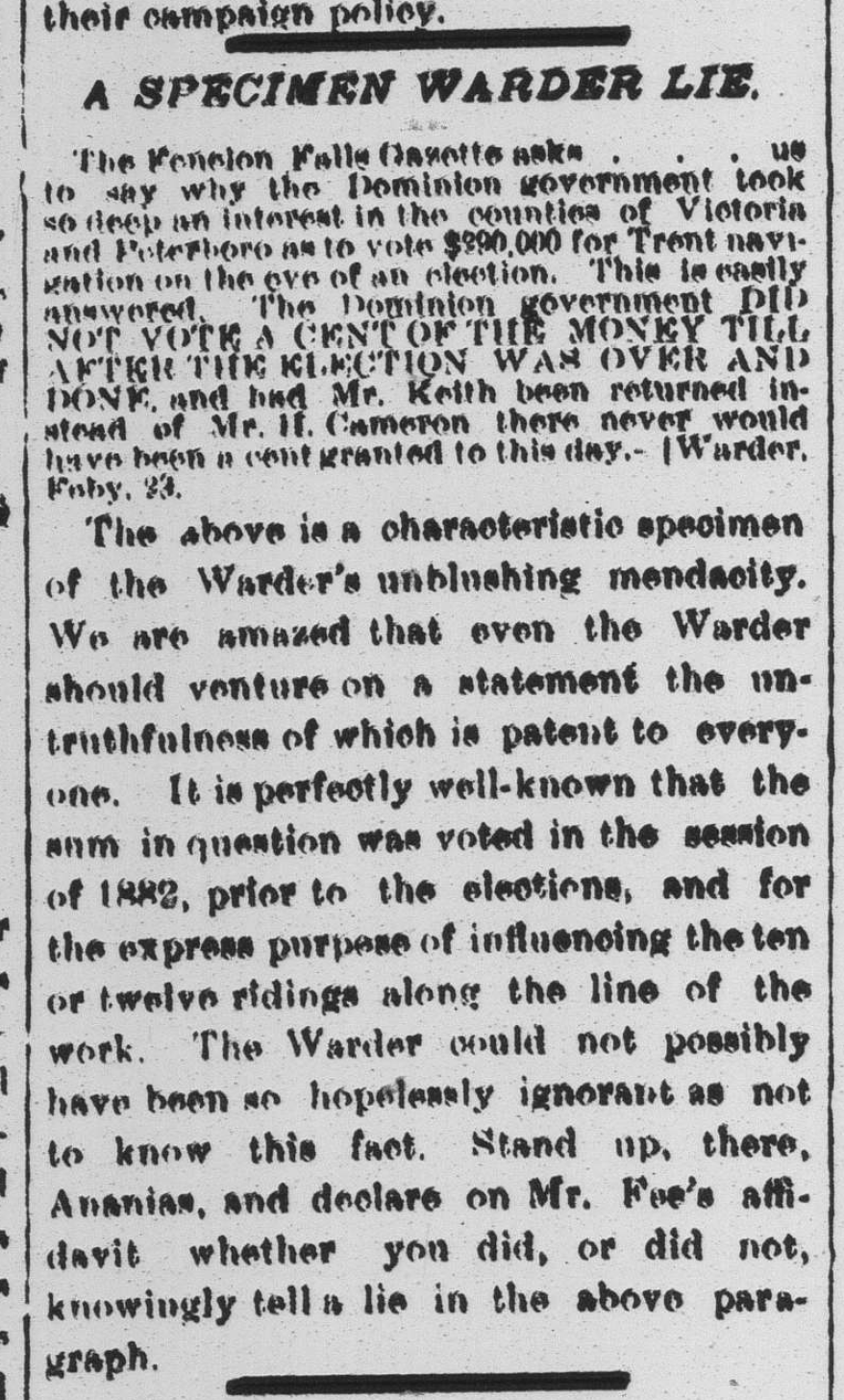
In March of 1883, the editor of the Canadian Post called out rival paper, the Warder, for spreading fake news. In a column titled, “A Specimen Warder Lie,” the Post reprinted the paragraph of “untruthfulness” and followed with a cheeky rebuttal.
The Fenelon Falls Gazette asks . . . us to say why the Dominion government took so deep an interest in the counties of Victoria and Peterboro as to vote $390,000 for Trent navigation on the eve of an election. This is easily answered. The Dominion government DID NOT VOTE A CENT OF THE MONEY TILL AFTER THE ELECTION WAS OVER AND DONE, and had Mr. Keith been returned instead of Mr. H. Cameron there never would have been a cent granted to this day. [Warder, Feb 23.]
This above is a characteristic specimen of the Warder’s unblushing mendacity. We are amazed that even the Warder should venture on a statement the untruthfulness of which is patent to everyone. It is perfectly well-known that the sum in question was voted in the session of 1882, prior to the elections, and for the express purpose of influencing the ten or twelve ridings along the line of the work. The Warder could not possibly have been so hopelessly ignorant as not to know this fact. Stand up, there, Ananias, and declare on Mr. Fee’s affidavit whether you did, or did not, knowingly tell a lie in the above paragraph.
The Canadian Post, Friday, March 2, 1883.
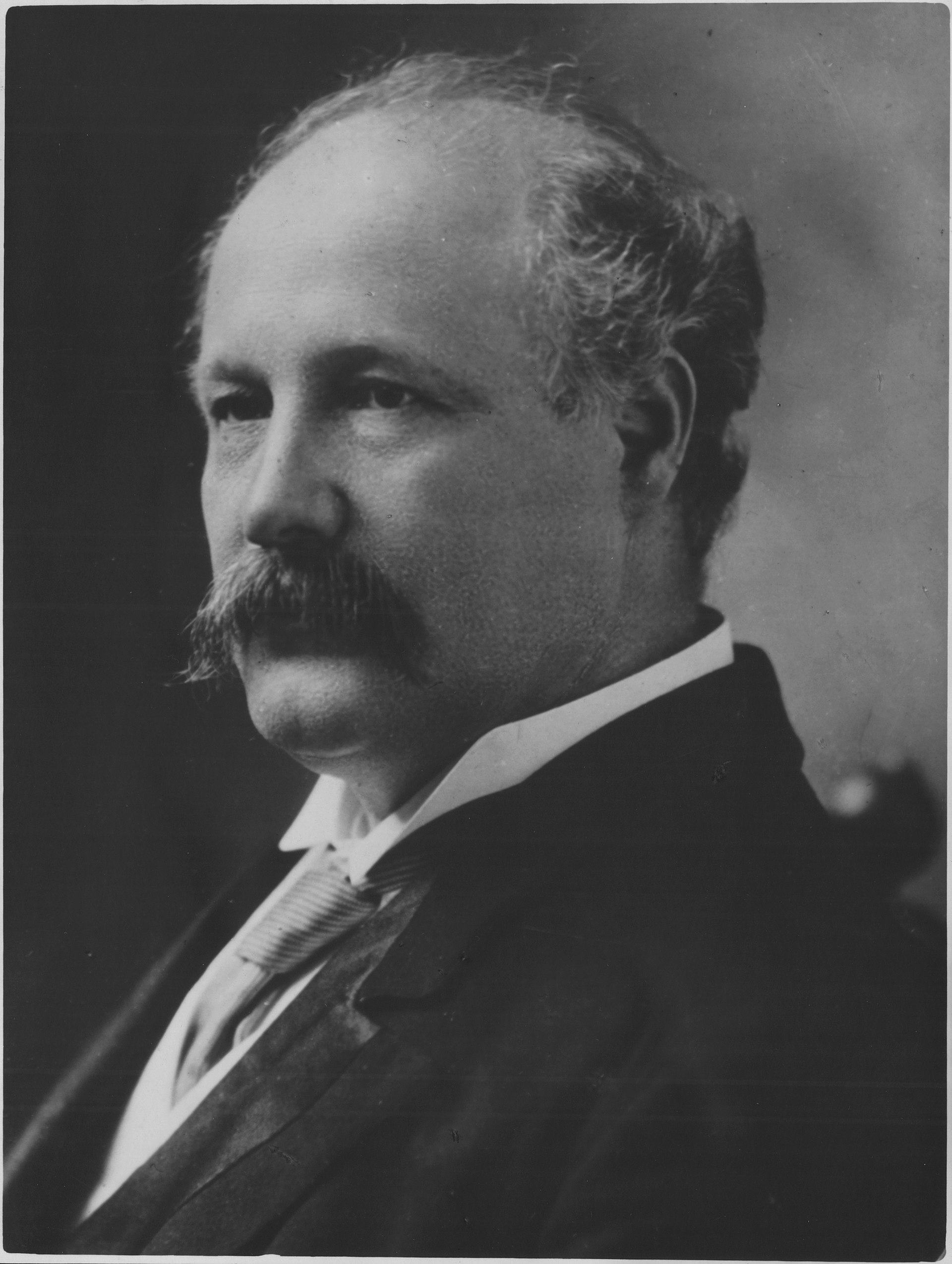
In fact, the Post called out the Warder for spreading lies on more than one occasion, and editor Sir Sam Hughes even faced charges of slander.
Fake news has been around forever. It is the reason we need ethics in journalism and diverse newspapers and not a single conglomerate controlling all media. Imagine if the Warder had been the only newspaper in 1883.
William Albert Sherwood (1859-1919) was born in Omemee on August 1, 1859. His father, William Sherwood, was born England, settled his family in Omemee, where he worked as a shoemaker. His mother was Eliza from Ireland, and his siblings included five brothers (Henry, Thomas, George, Joseph, Arthur) and three sisters (Ann, Jane, Laura.)
In 1881, The Canadian Post began publishing Sherwood’s poetry, starting with lines dedicated to the Rev. Dr. Jeffers, titled, “Mind and Matters.” At the time, Sherwood was living locally in Kawartha Lakes (then Victoria County.) The editor took a shining to Sherwood’s work and went on to publish many of his poems. Then, in the June 11, 1886 edition, the Post published this brief note about Sherwood, “We notice that Mr. W. A. Sherwood, artist, has taken charge of the department of drawing, painting and perspective at the Toronto business college.”
Even after Sherwood moved to Toronto, the Post continued to publish his poems, but by this time so were the Toronto papers and other papers across Canada and editors of poetry collections. It wasn’t long before Sherwood had his own volume of poetry published.
LAKE COUCHICHING
Oft have I loitered listening, Couchiching,
   To the soft lull of distant waving trees
At evening, and the sweet murmuring
   Of waters waken'd with the evening breeze
To one, whilst wandering thy shores along
Unseen, sweet voices hymn their evening song.

Long since the Red Man named thee Couchiching,
   Or built his wigwam rude upon thy shore;
But longer after shall the minstrel sing
   Of him that named thee but knows thee no more.
Unlike with thee had I that minstrel power,
I'd sing thee long, I'd sing thee every hour!

Hallowed that mourn when first we learn to know
   How near to Nature are the hearts we prove;
More hallowed still in even's after-glow,
   How dear to Nature is the one we love.
Thus thy bright waters, joyous Couchiching,
O'er one I love for ever seem to sing.

From, Songs of the Great Dominion, edited by William Douw Lighthall, Walter Scott, England, 1889.
Sherwood also wrote about Canadian art and gave speeches at events with his speeches being reproduced as essays in the Toronto papers. His most well-known essay was “The National Aspect of Canadian Art” that was included in Canada: and Encyclopaedia of the Country: History of Presbyterianism, edited by John Castell Hopkins, Linscott Publishing Company, 1898.
The want of a broad sympathetic interest in national Art has, however, deterred the progress and, to a large measure, fatally injured this branch of the Art life of our country. The evil has been increased by the taste of men of wealth in Montreal and Toronto, who have covered their walls with foreign pictures largely to the exclusion of native work. The contention that the native work is not equal in artistic treatment is advanced, and that it does not possess names which are world-honoured.
“The National Aspect of Canadian Art” by W.A. Sherwood, 1898.
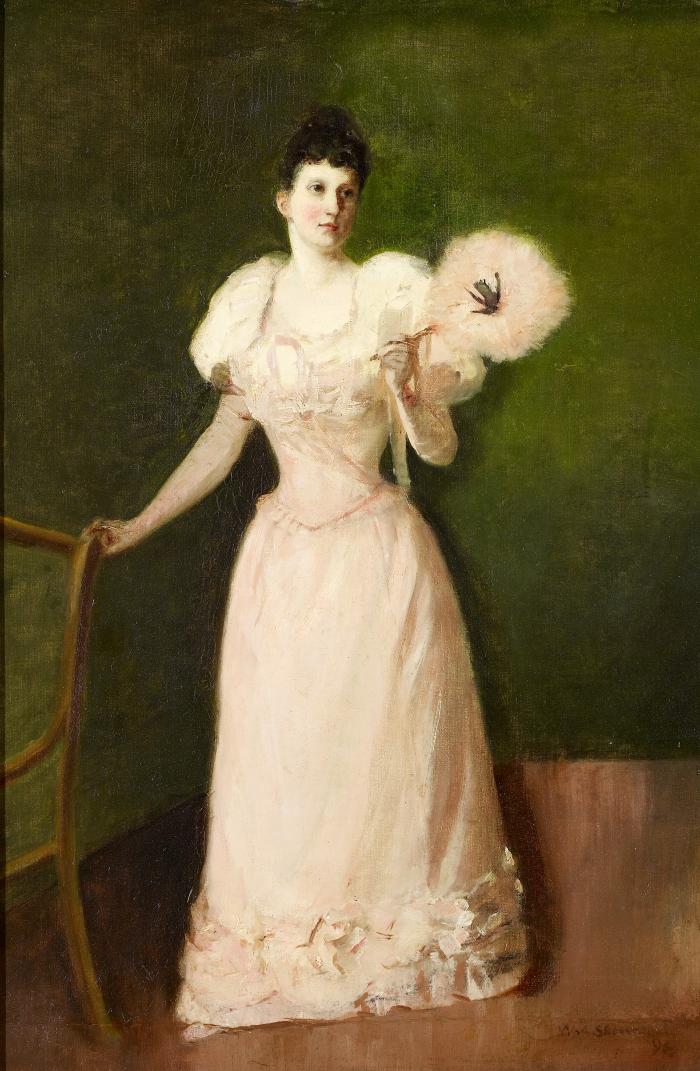
Sherwood painted his first portrait at age 15 and soon rose to prominence in Canadian art circles. In the 1881 Census, at just 26 years of age, Sherwood’s occupation is listed as ‘Artist.’ The best known of his paintings included, “The Gold Prospector,” which was in the possession of the Ontario Government at the time of Sherwood’s death, “The Canadian Rancher,” “The Canadian Backwoodsman,” “The Entomologist,” and “The Negotiation,” (pictured below) which was purchased by the Dominion Government.
His most controversial portrait was that of Sir George Ross.
In 1901, the Ross Club decided to have a portrait painted of the Premier of Ontario, Sir George Ross, for whom the club was named. They commissioned Sherwood, and the portrait was presented to Ross at a meeting in November that year at St. George’s Hall in Toronto.
Sherwood’s requested fee of $500 went unpaid. He claimed the frame alone cost him $100. He was paid $50.
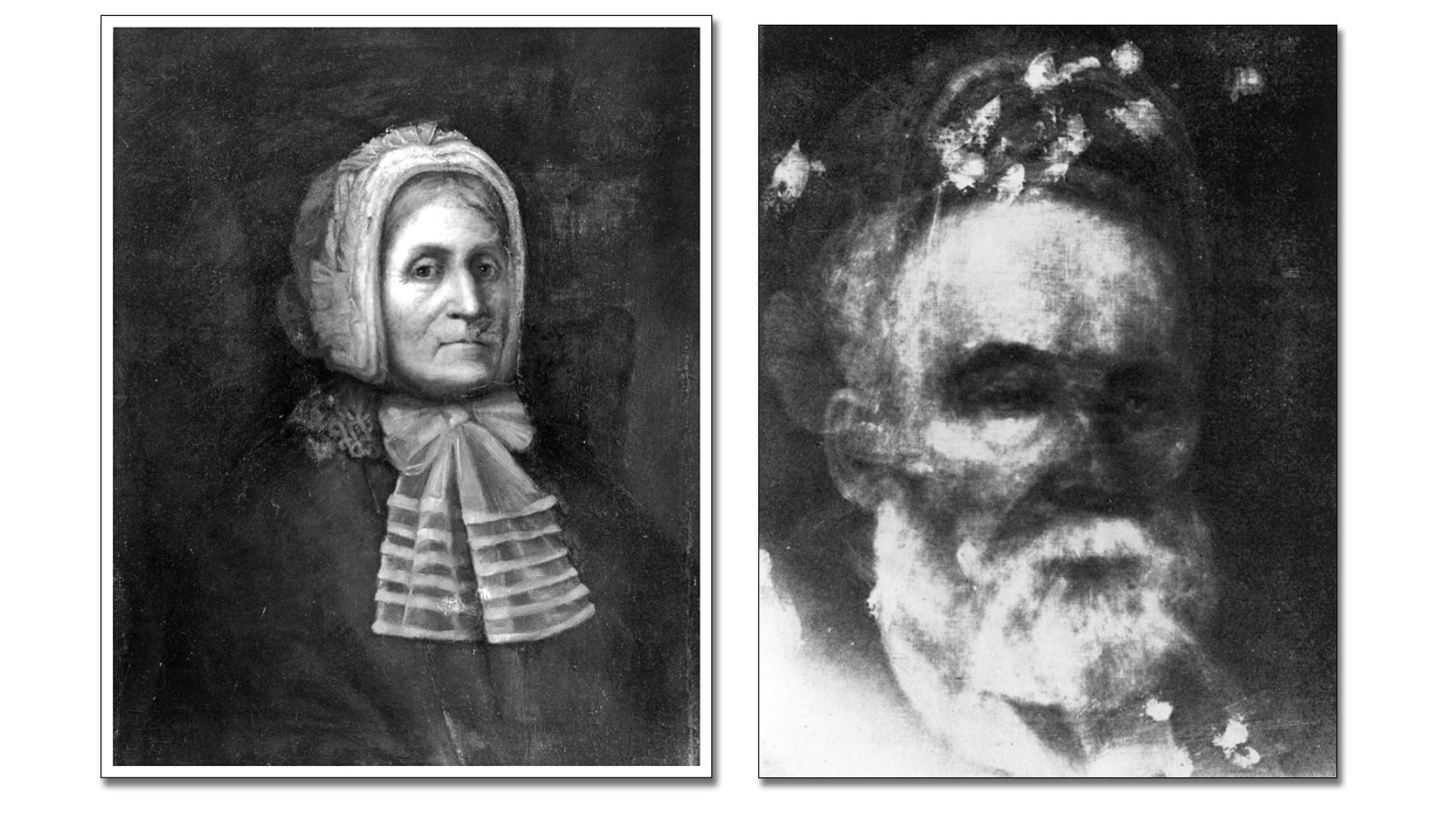
Turns out, Ross despised the painting. He insisted that after the presentation the picture be “turned to the wall and shoved aside.”
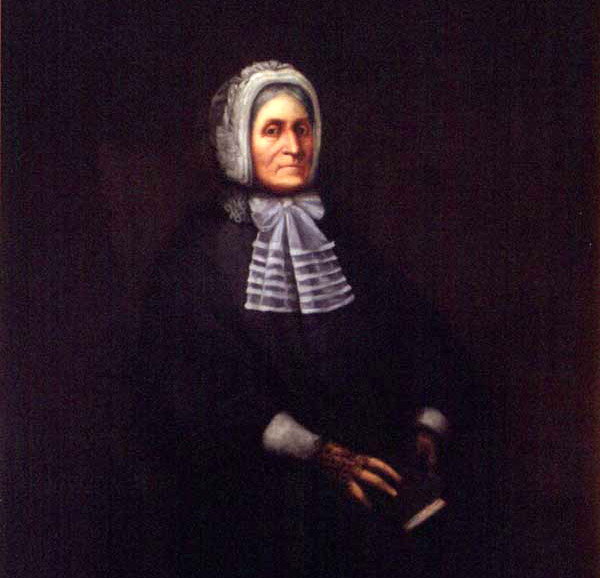
Instead, the painting was shipped to his home. Where his future wife, Mildred Peel, painted over it with a portrait of Laura Secord. The Secord painting was hung in the Provincial Legislature and she was paid a commission. Ross and Peel were married in 1907.
“Laura Secord” by Mildred Peel, 1904. At the Legislative Assembly of Ontario. (https://www.ola.org/en/photo/laura-secord)Detail of “Laura Secord” (left) and a 1936 x-ray of the same painting revealing the George Ross portrait beneath (right)
Among others, portrait subjects included Rev. Dr. Scadding, S.P. May, Lieut.-Col. A. E. Belcher, Alexander McLauchlan, the poet Sir Aemilius Irving, and Miss Pauline Johnson.
Sherwood exhibited in Canada, Great Britain and the United States. He was one of the founders of the Central School of Art and Design of Toronto and the Anglo-Saxon Union. He served as president of the Progress Club of Toronto in 1898 and also of the Victoria County Old Boys’ Association. He was a member of the Ontario Society of Artists, an Associate of the Royal Canadian Academy, and life member of the Canadian Institute.
In 1899, his painting, “St. Bernard,” was one of several selected by the Provincial Education Department and purchased by the Provincial Government. (Report of the Minister of Education, Ontario, 1899. Ontario Sessional Papers, 1900, No. 12-14.)
Sherwood died December 5, 1919 in Toronto and was buried at the Mount Pleasant Cemetery. He was unmarried with no children.
Works:
Sherwood, W. A., Lays, Lyrics and Legends, Hunter-Rose, 1914.
“Temperance soldiers: song and chorus,” lyrics by W.A. Sherwood, music by J.F. Johnstone. 1887.
“THE ROSS CLUB MEETING.” The Globe (1844-1936) Nov 12 1901.
“W. A. SHERWOOD, LOCAL ARTIST, PASSES AWAY: NOTED AS PAINTER OF PORTRAITS AND CANADIAN SCENE PICTURES END COMES SUDDENLY.” The Globe (1844-1936) Dec 06 1919.
“Funeral of W. A. Sherwood to Mt. Pleasant Cemetery.” The Globe (1844-1936) Dec 09 1919.
“TORY PAINTED ROSS PORTRAIT, LATER HEROINIE: PRESENTATION OF “LAURA SECORD” OIL 30 YEARS AGO RECALLED.” The Globe (1844-1936) Feb 26 1936.




 kawarthalakeswriters.com