
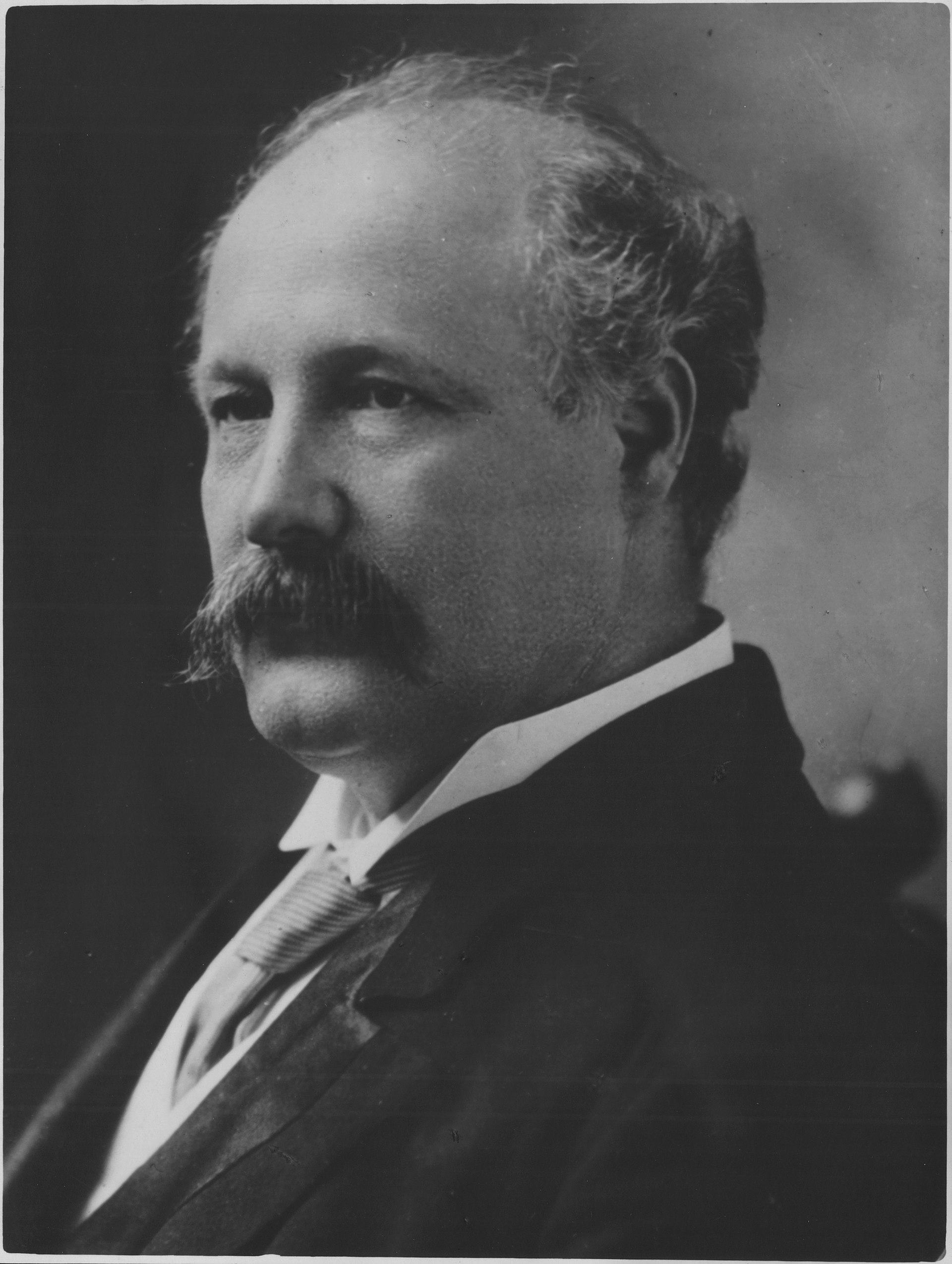
William Albert Sherwood (1859-1919) was born in Omemee on August 1, 1859. His father, William Sherwood, was born England, settled his family in Omemee, where he worked as a shoemaker. His mother was Eliza from Ireland, and his siblings included five brothers (Henry, Thomas, George, Joseph, Arthur) and three sisters (Ann, Jane, Laura.)
In 1881, The Canadian Post began publishing Sherwood’s poetry, starting with lines dedicated to the Rev. Dr. Jeffers, titled, “Mind and Matters.” At the time, Sherwood was living locally in Kawartha Lakes (then Victoria County.) The editor took a shining to Sherwood’s work and went on to publish many of his poems. Then, in the June 11, 1886 edition, the Post published this brief note about Sherwood, “We notice that Mr. W. A. Sherwood, artist, has taken charge of the department of drawing, painting and perspective at the Toronto business college.”
Even after Sherwood moved to Toronto, the Post continued to publish his poems, but by this time so were the Toronto papers and other papers across Canada and editors of poetry collections. It wasn’t long before Sherwood had his own volume of poetry published.
LAKE COUCHICHING
Oft have I loitered listening, Couchiching,
   To the soft lull of distant waving trees
At evening, and the sweet murmuring
   Of waters waken'd with the evening breeze
To one, whilst wandering thy shores along
Unseen, sweet voices hymn their evening song.

Long since the Red Man named thee Couchiching,
   Or built his wigwam rude upon thy shore;
But longer after shall the minstrel sing
   Of him that named thee but knows thee no more.
Unlike with thee had I that minstrel power,
I'd sing thee long, I'd sing thee every hour!

Hallowed that mourn when first we learn to know
   How near to Nature are the hearts we prove;
More hallowed still in even's after-glow,
   How dear to Nature is the one we love.
Thus thy bright waters, joyous Couchiching,
O'er one I love for ever seem to sing.

From, Songs of the Great Dominion, edited by William Douw Lighthall, Walter Scott, England, 1889.
Sherwood also wrote about Canadian art and gave speeches at events with his speeches being reproduced as essays in the Toronto papers. His most well-known essay was “The National Aspect of Canadian Art” that was included in Canada: and Encyclopaedia of the Country: History of Presbyterianism, edited by John Castell Hopkins, Linscott Publishing Company, 1898.
The want of a broad sympathetic interest in national Art has, however, deterred the progress and, to a large measure, fatally injured this branch of the Art life of our country. The evil has been increased by the taste of men of wealth in Montreal and Toronto, who have covered their walls with foreign pictures largely to the exclusion of native work. The contention that the native work is not equal in artistic treatment is advanced, and that it does not possess names which are world-honoured.
“The National Aspect of Canadian Art” by W.A. Sherwood, 1898.
Sherwood painted his first portrait at age 15 and soon rose to prominence in Canadian art circles. In the 1881 Census, at just 26 years of age, Sherwood’s occupation is listed as ‘Artist.’ The best known of his paintings included, “The Gold Prospector,” which was in the possession of the Ontario Government at the time of Sherwood’s death, “The Canadian Rancher,” “The Canadian Backwoodsman,” “The Entomologist,” and “The Negotiation,” (pictured below) which was purchased by the Dominion Government.
His most controversial portrait was that of Sir George Ross.
In 1901, the Ross Club decided to have a portrait painted of the Premier of Ontario, Sir George Ross, for whom the club was named. They commissioned Sherwood, and the portrait was presented to Ross at a meeting in November that year at St. George’s Hall in Toronto.
Sherwood’s requested fee of $500 went unpaid. He claimed the frame alone cost him $100. He was paid $50.
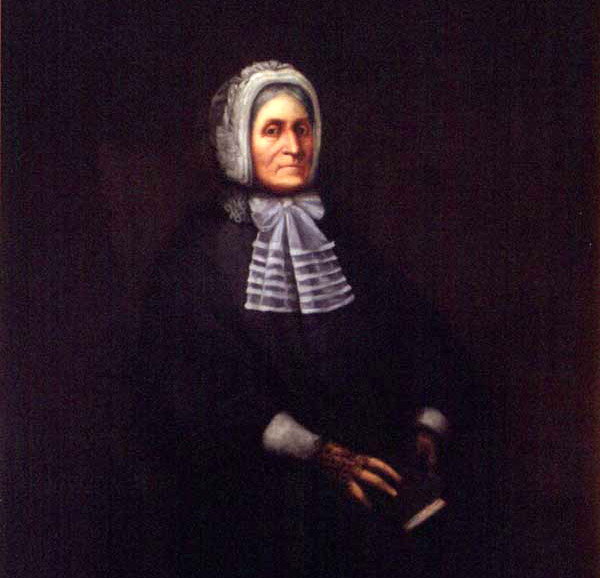
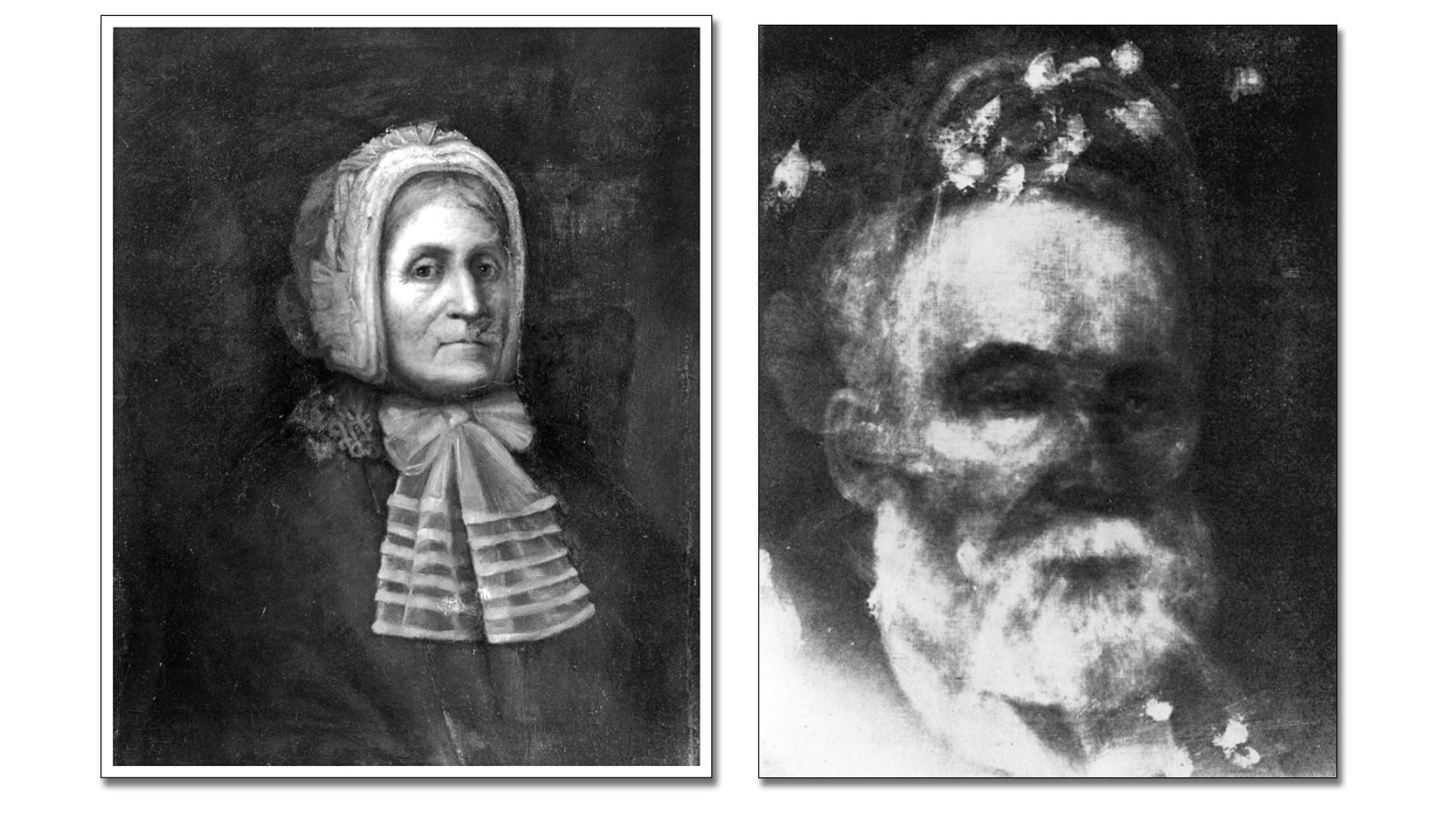
Turns out, Ross despised the painting. He insisted that after the presentation the picture be “turned to the wall and shoved aside.”
Instead, the painting was shipped to his home. Where his future wife, Mildred Peel, painted over it with a portrait of Laura Secord. The Secord painting was hung in the Provincial Legislature and she was paid a commission. Ross and Peel were married in 1907.
Among others, portrait subjects included Rev. Dr. Scadding, S.P. May, Lieut.-Col. A. E. Belcher, Alexander McLauchlan, the poet Sir Aemilius Irving, and Miss Pauline Johnson.
Sherwood exhibited in Canada, Great Britain and the United States. He was one of the founders of the Central School of Art and Design of Toronto and the Anglo-Saxon Union. He served as president of the Progress Club of Toronto in 1898 and also of the Victoria County Old Boys’ Association. He was a member of the Ontario Society of Artists, an Associate of the Royal Canadian Academy, and life member of the Canadian Institute.

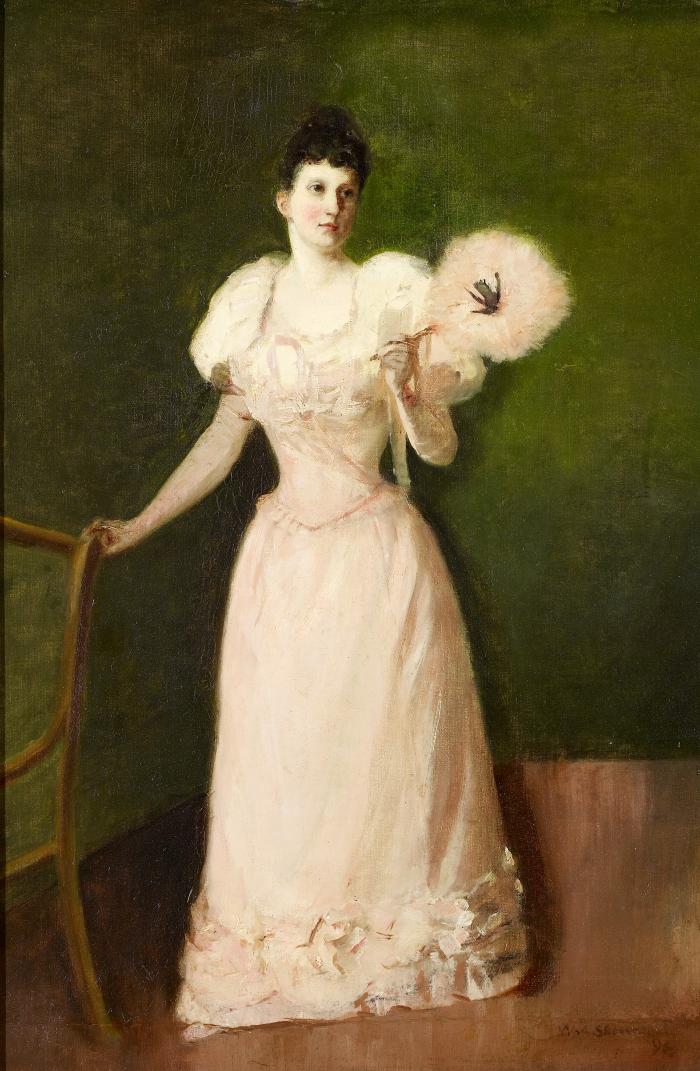
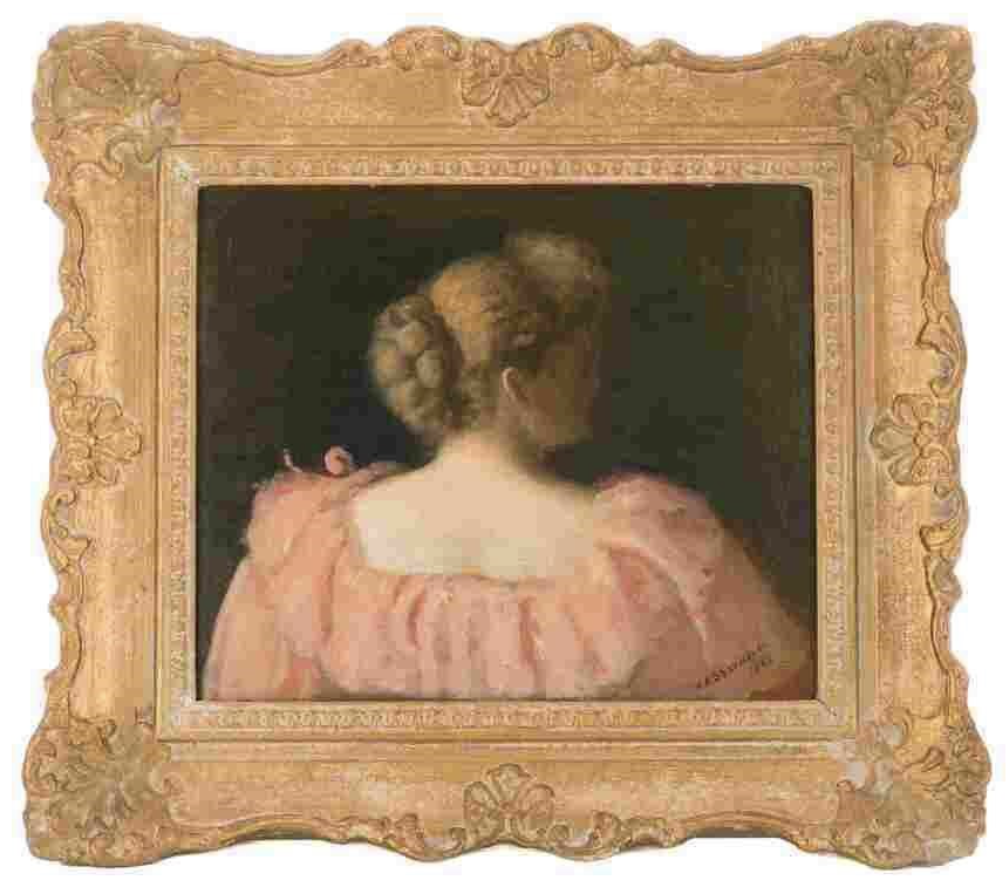

In 1899, his painting, “St. Bernard,” was one of several selected by the Provincial Education Department and purchased by the Provincial Government. (Report of the Minister of Education, Ontario, 1899. Ontario Sessional Papers, 1900, No. 12-14.)
Sherwood died December 5, 1919 in Toronto and was buried at the Mount Pleasant Cemetery. He was unmarried with no children.
Works:
Sherwood, W. A., Lays, Lyrics and Legends, Hunter-Rose, 1914.
“Temperance soldiers: song and chorus,” lyrics by W.A. Sherwood, music by J.F. Johnstone. 1887.
“A National Spirit in Art,” The Canadian Magazine, volume 3, no. 6 (Oct. 1894.) https://www.canadiana.ca/view/oocihm.8_06251_20/8
References:
“THE ROSS CLUB MEETING.” The Globe (1844-1936) Nov 12 1901.
“W. A. SHERWOOD, LOCAL ARTIST, PASSES AWAY: NOTED AS PAINTER OF PORTRAITS AND CANADIAN SCENE PICTURES END COMES SUDDENLY.” The Globe (1844-1936) Dec 06 1919.
“Funeral of W. A. Sherwood to Mt. Pleasant Cemetery.” The Globe (1844-1936) Dec 09 1919.
“TORY PAINTED ROSS PORTRAIT, LATER HEROINIE: PRESENTATION OF “LAURA SECORD” OIL 30 YEARS AGO RECALLED.” The Globe (1844-1936) Feb 26 1936.
Songs of the Great Dominion: voices from the forests and waters, the settlements and cities of Canada, Lighthall, W. D. (William Douw), 1857-1954. Walter Scott, London, 1889. https://archive.org/details/songsofgreatdomi00lighiala/songsofgreatdomi00lighiala
http://www.archives.gov.on.ca/en/explore/online/1812/big/big_117_secord_xray.aspx
http://www.archives.gov.on.ca/en/explore/online/1812/big/big_116_secord_portrait.aspx
 kawarthalakeswriters.com