Alan Roy Capon

Known for being the longtime editor of the Lindsay Post, Alan R. Capon was also an author.
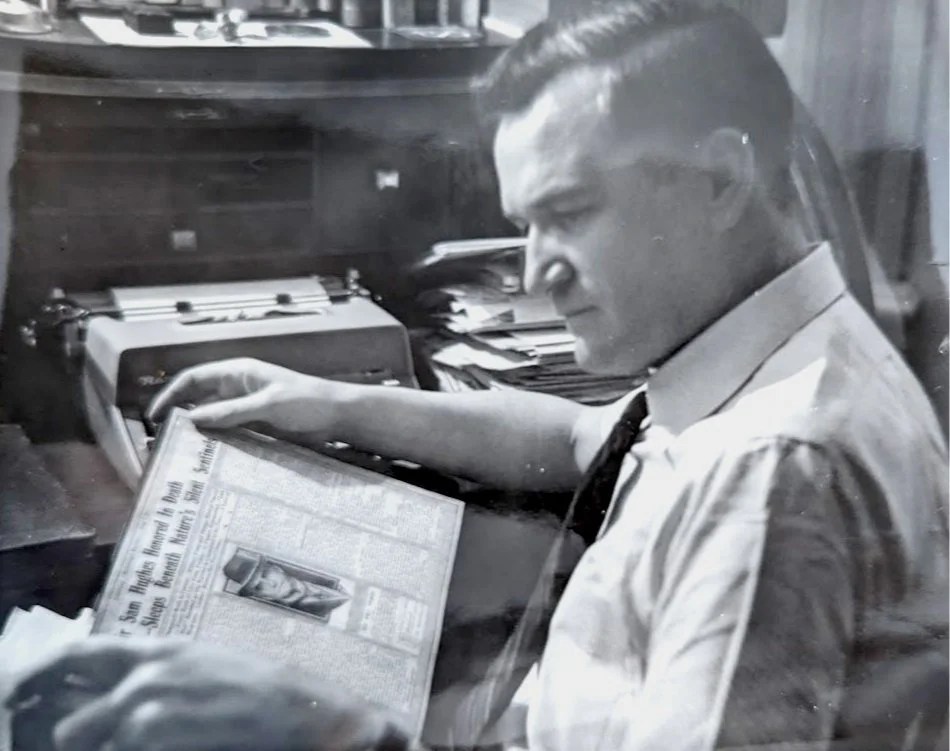
Photo: KLMA

Born in 1932 in England, Alan Roy Capon immigrated to Canada in 1937 as a married father of three. He was hired as a copywriter for the Robert J. Simpson company. In 1963, he established the Minden Times newspaper and was editor for the next two years, when he handed over the reins so he could helm the Lindsay Daily Post, where he remained editor until 1970. For the next twenty years, he was editor of the Kingston Whig-Standard and was also editor of the Picton Gazette. Capon was an active member of community organizations, a photographer, and an historian.

His books about Kawartha Lakes include His Faults Lie Gently: the incredible Sam Hughes (1969) and Historic Lindsay (1973).
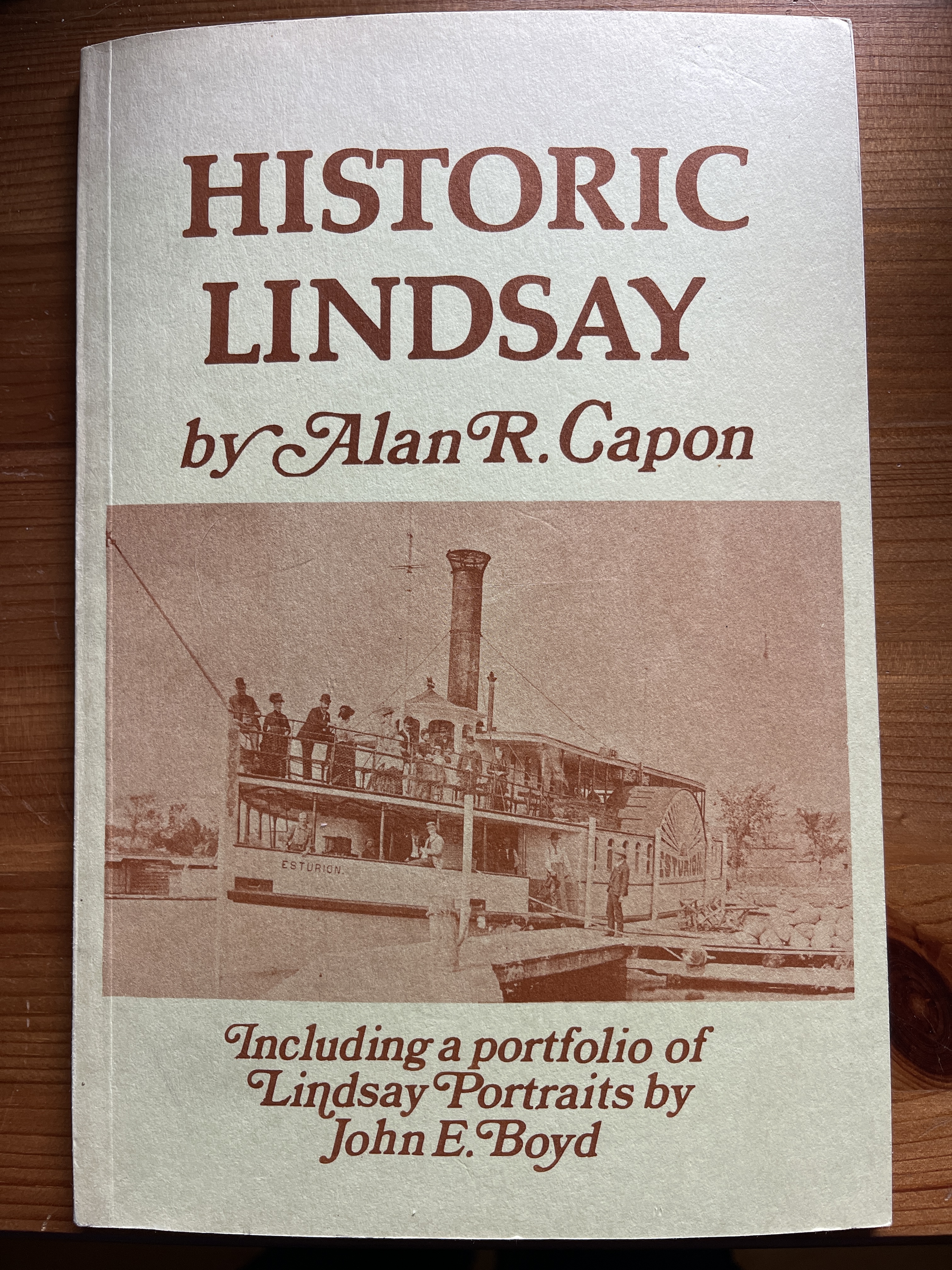
The Kawartha Lakes Museum and Archives (KLMA) produced a digital exhibition about the Lindsay Post and included the biography of Alan R. Capon: https://www.klmuseumarchives.ca/lindsay-post

Books:

His Faults Lie Gently: the incredible Sam Hughes (1969)

Stories of Prince Edward County (1973)

Historic Lindsay (1973)

Prince Edward Treasury (1976)

Mascots of the Hastings and Prince Edward Regiment (1977)

Desperate Venture: Central Ontario Railway (1979)

A Goodly Heritage (1980)

Everybody Called Him Harvey (1982)

Fifty Years A County Veterinarian (1983)

Deseronto: Then and Now (1989)

Further Reading:

https://www.countyweeklynews.ca/opinion/columnists/my-last-name-is-capon-and-i-dont-sell-chickens
Fake News in 1883

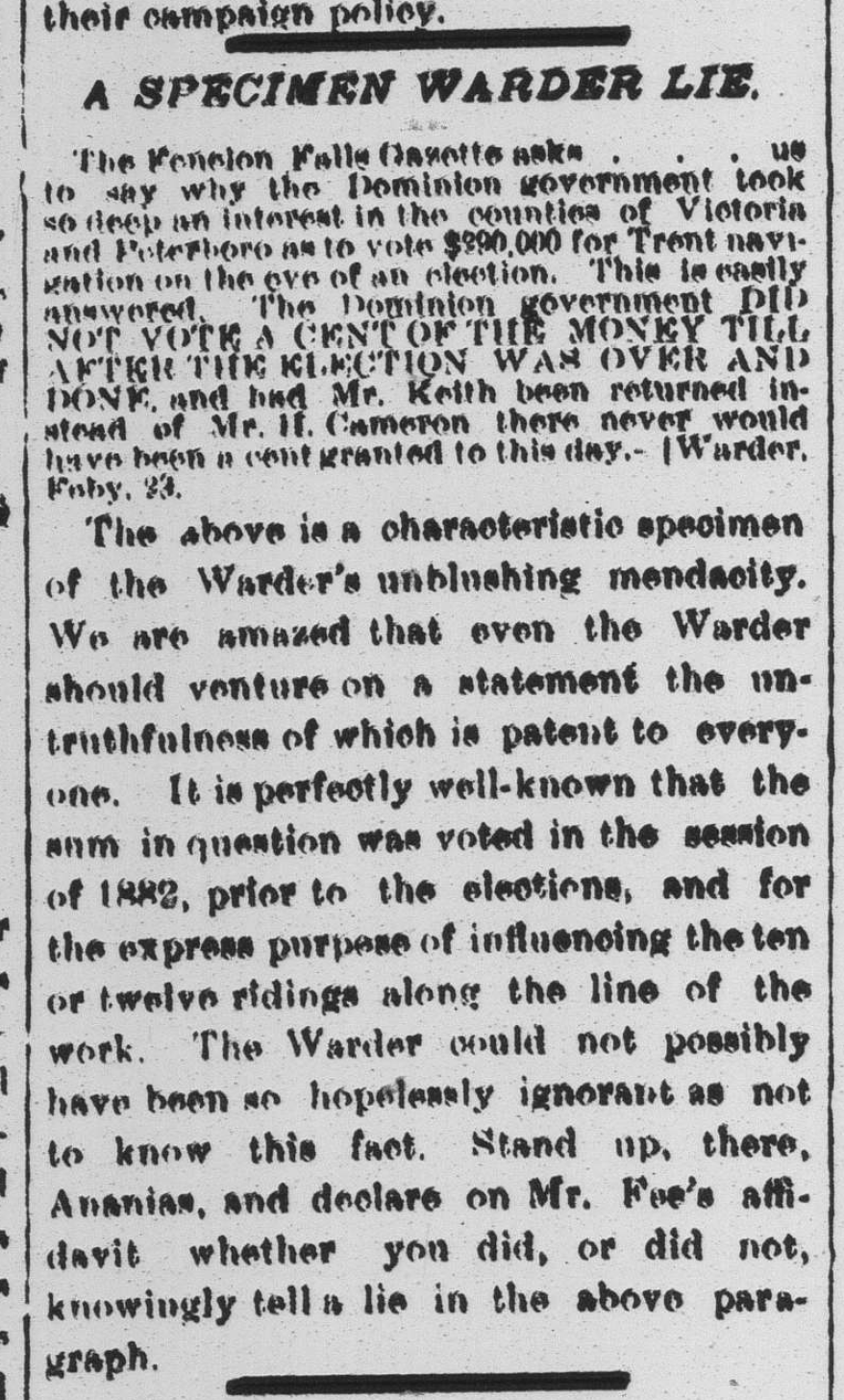
In March of 1883, the editor of the Canadian Post called out rival paper, the Warder, for spreading fake news. In a column titled, “A Specimen Warder Lie,” the Post reprinted the paragraph of “untruthfulness” and followed with a cheeky rebuttal.

The Fenelon Falls Gazette asks . . . us to say why the Dominion government took so deep an interest in the counties of Victoria and Peterboro as to vote $390,000 for Trent navigation on the eve of an election. This is easily answered. The Dominion government DID NOT VOTE A CENT OF THE MONEY TILL AFTER THE ELECTION WAS OVER AND DONE, and had Mr. Keith been returned instead of Mr. H. Cameron there never would have been a cent granted to this day. [Warder, Feb 23.]

This above is a characteristic specimen of the Warder’s unblushing mendacity. We are amazed that even the Warder should venture on a statement the untruthfulness of which is patent to everyone. It is perfectly well-known that the sum in question was voted in the session of 1882, prior to the elections, and for the express purpose of influencing the ten or twelve ridings along the line of the work. The Warder could not possibly have been so hopelessly ignorant as not to know this fact. Stand up, there, Ananias, and declare on Mr. Fee’s affidavit whether you did, or did not, knowingly tell a lie in the above paragraph.

The Canadian Post, Friday, March 2, 1883.

In fact, the Post called out the Warder for spreading lies on more than one occasion, and editor Sir Sam Hughes even faced charges of slander.

Fake news has been around forever. It is the reason we need ethics in journalism and diverse newspapers and not a single conglomerate controlling all media. Imagine if the Warder had been the only newspaper in 1883.

Original article is transcribed above, but here is the clipping, and a digital copy can be read here: https://vitacollections.ca/kl-digitalarchive/3179864/1883-03-02/issue

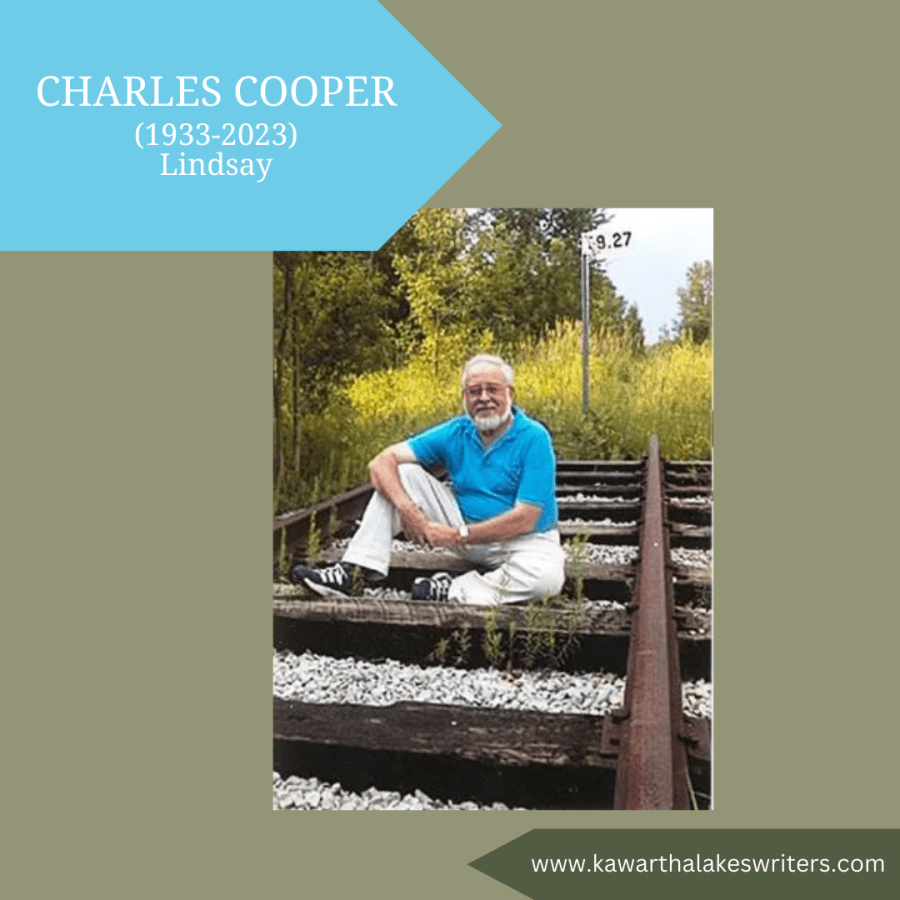
Charles Cooper

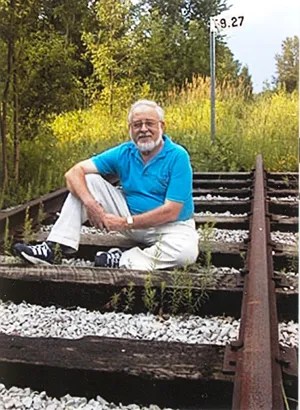
Charles Cooper at Beeton, ON end-of-steel 1999. Photo: Andrea Percy from author’s website.

Charles Louis Cooper (1933-2023) was born on 2 July 1933 in Berlin to a German father and English mother. His family hid in the Germany countryside during the Second World War. After the war, Cooper moved to England and studied at Cambridge. He moved to Canada in 1957.

He got his love for trains when lived in Europe and always wanted to work on the railway. He ended up working in insurance and trains became his pastime. He was an honorary member of the Lindsay & District Model Railroaders and had a large model train set-up in his basement.

Cooper also spent his time researching railroad history and writing books. Rails to the Lake was published by Boston Mills Press in 1980. Hamilton’s Other Railway expanded on the first book and was published in 2001.

Narrow Gauge for Us recounts the history of the Toronto-Nippissing line that partly ran through Kawartha Lakes. It was published in 1982.

After Omer Lavalleee passed away, leaving his manuscript incomplete, Cooper took on the role of seeing the book to completion, and Canadian Pacific to the East – the International of Maine Division was published in 2007. That year the book won the Canadian Railroad Historical Association’s book award.

Cooper also kept a lively website at Charles Cooper’s Railway Pages.

Cooper passed away on 13 February 2023 at the Ross Memorial Hospital in Lindsay.

Books:

Rails to the Lake (1980)

Narrow Gauge for Us (1982)

Hamilton’s Other Railway (2001)

Canadian Pacific to the East – the International of Main Division (2007)

Sources:

Charles Cooper’s Railway Pages.

Nolan, Daniel. “Obituary: Historian Charles Cooper was fascinated by Hamilton railways”. Toronto Star. 13 March 2023.

Honorary L&DMR member and renowned author Charles Cooper“. Lindsay & District Model Railroaders. 14 February 2023.

Harry van Oudenaren

Born on November 4, 1924, Hendrikus van Oudenaren (1924-2020) emigrated to Canada from the Netherlands in October 1950 after serving for two years in a forced labour camp in Stettin, where he worked as a tool and die maker and built boats. For 17 years Harry worked at Pogues Garage on Boyd Street, learning the auto-repair trade. He returned briefly to the Netherlands, long enough to get married, and came back to Canada. The family settled in Bobcaygeon where Harry set up an auto repair garage in an old schoolhouse, while establishing his home with his wife Johanna and six children across the street. For a while, his son Pieter ran the garage until he decided to take up cheesemaking.

The former Rokeby School at 35 North Street in Bobcaygeon. Image from Kawartha Settlers’ Village.
Google image captured May 2018.

Harry began to collect archival and historic information and images about Bobcaygeon. His family formed a friendship with another Bobcaygeon historian and author, Dorothe Comber. She and Harry shared information and upon her death, she left her collection to Harry.

The school that housed the garage business was the former Rokeby School, or Verulam School Section (S.S.) No. 6 at 35 North Street in Bobcaygeon. The northern section of Bobcaygeon was originally called Rokeby when it was first founded, but when it joined with the southern neighbouring areas to form a town, the name Rokeby was lost in favour of Bobcaygeon.

Harry also collected objects of historical interest, which can be found in the Harry van Oudenaren Museum at Kawartha Settlers’ Village, established in 2018. Harry’s son, Pieter, gives a tour of the museum on YouTube. When his collection became too great to stay in his basement, Harry had a building constructed and moved to the Village property.

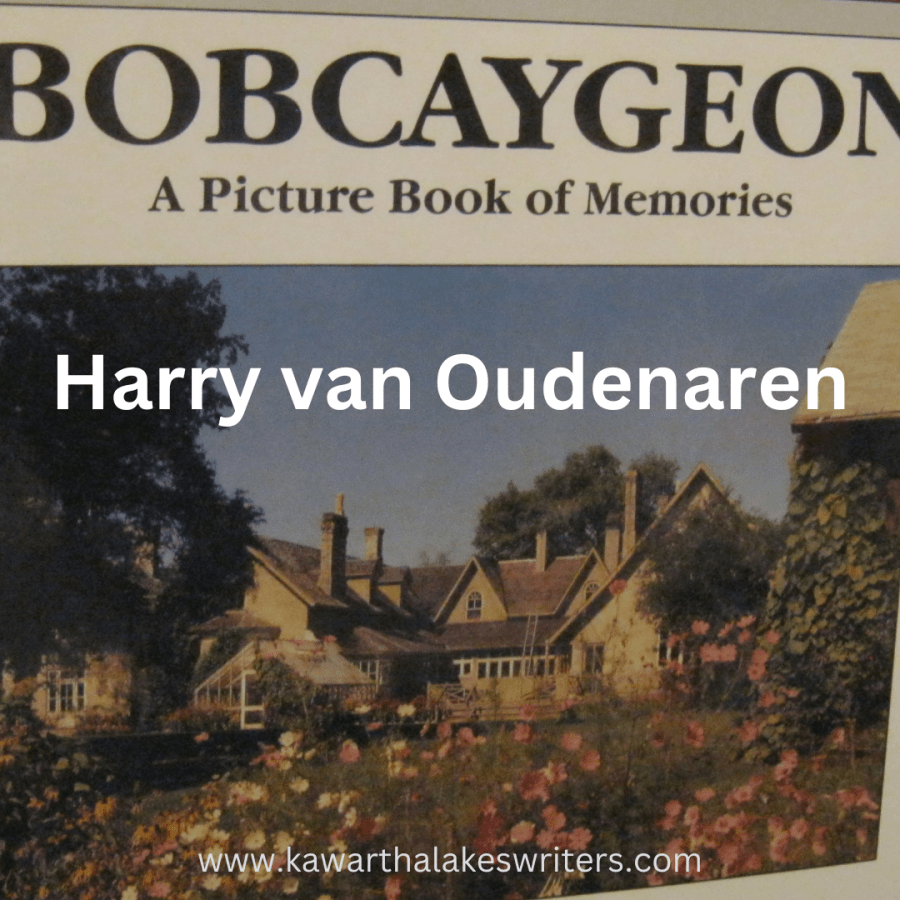
In 1992, Harry published some of his collection in a book, Bobcaygeon: a picture book of memories.

Harry passed away at his home in 2020 with his family by his side. His collection of items relating to the Boyd family went to the Boyd Museum and his items went to Kawartha Settlers’ Village.

Books:

Bobcaygeon: a picture book of memories (1992)

Anne M. Barbour

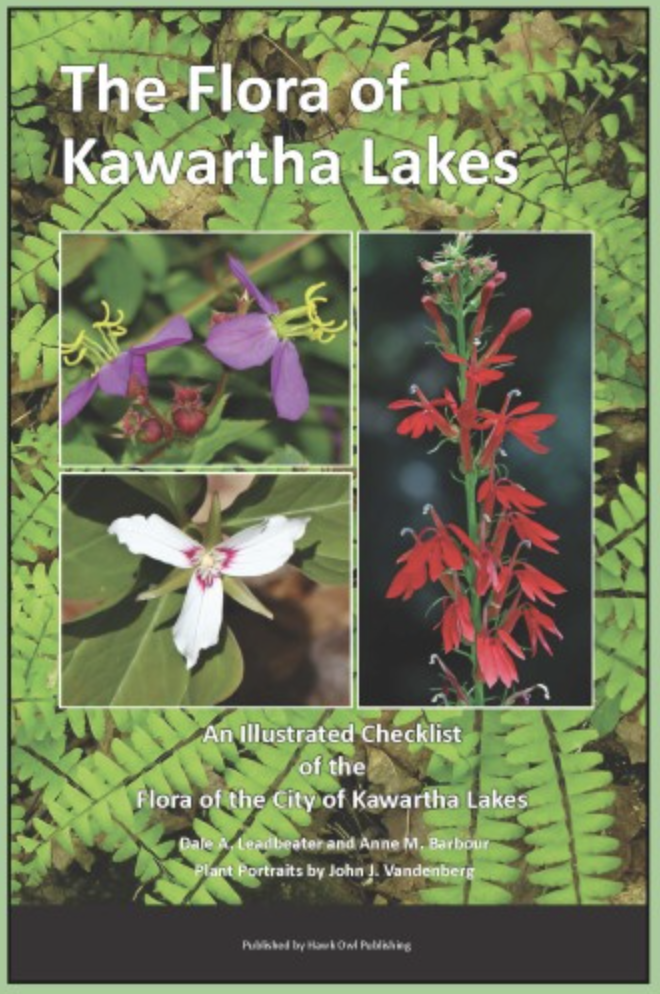
Coboconk resident and graduate of University of Windsor, Barbour is the co-author of The Flora of Kawartha Lakes.

Anne is a retired professional librarian and earned her botanical skills with the Essex County Field Naturalists, and later the Kawartha and Carden Field Naturalists. She has a long history of volunteer positions with KFN and is currently assisting Kawartha Conservation in monitoring new invasive aquatic species.

https://www.digitaljournal.com/pr/kawartha-field-naturalists-launches-the-book-the-flora-of-kawartha-lakes

Her co-author, Dale Leadbeater, describes how the book came together:

My contributions started when we collected field data for 10 years including pressing, drying, mounting, photographing, labelling and entering data into a custom database thanks to funding from the Stewardship Council and the ROM. Over 100 volunteers from all walks of life including students from Fleming College and almost as many landowners who often provided lunch. My co-author, Anne Barbour, hosted so many mounting days and her husband, Brian, made endless gallons of soup! We could publish a cookbook with all the great meals we ate!

Then Anne and I spent countless hours combing through other published lists for CKL to update names and to determine whether they were real or errors, tracking down specimens from colleagues and those filed by historical figures such as John Macoun, the first Canadian Botanist who accompanied the Sir Sanford Fleming expedition across Canada in 1872. It was a trip not only through space but also time. Truly amazing.

https://www.slrconsulting.com/en/news-and-insights/insights/slr-ecologist-wrote-book-local-flora

Book:

The Flora of Kawartha Lakes (2022)

Dale A. Leadbeater

Retired from consulting, Leadbeater continues to volunteer for favourite projects, including the Couchiching Conservancy Land Trust as well as Harcourt Park Incorporated. A graduate of the University of Toronto, her focus has been on mitigation of climate change effects through land acquisition and management.

Along with Anne M. Barbour, she is the co-author of The Flora of the Kawarthas: An Illustrated Checklist of the Flora of the City if Kawartha Lakes, which includes reflections on historical ecology, occupation and how the current vegetation patterns were formed. The book is comprised of 14 years of research.

Any paddler will tell you that it’s not a good idea to stand up in a canoe or kayak. But that is exactly what Dale Leadbeater did when she noticed the distinctive bladders of American Bladdernut (Staphylea trifolia) growing on the bank of the Black River where she was paddling with two friends. “It couldn’t be, could it? Have to get a specimen to be sure!” She very carefully stood up in the kayak, while her friends exclaimed “Are you crazy?” Dale had to reach over her head to clip off a fruit-bearing twig. Then she had to sit down again… nearly as risky as standing up. But with the help of sturdy Red-osier Dogwoods for balance, she did not get wet. It turned out to be the only location in the entire City for this large shrub.

https://www.thepeterboroughexaminer.com/opinion/contributors/2022/03/11/flora-of-the-kawartha-lakes.html

Book:

The Flora of Kawartha Lakes (2022)