2024 marks the 150th anniversary of the birth and legacy of author Lucy Maud Montgomery. Canadians coast to coast will gather in various ways to celebrate and honour the beloved Canadian author.
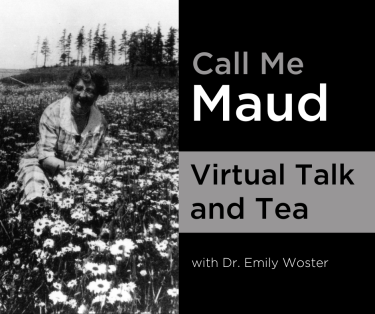
Kawartha Lakes Economic Development, with support from the Kirkfield and District Historical Society and Museum, invites you to join them on Sunday, August 18 at 1:30pm for – ‘Call Me Maud – a Kirkfield Connection to Lucy Maud Montgomery’ virtual talk and in-person tea event.
The fun and interactive event will feature refreshments served from Maud’s personal recipe book and welcome virtual keynote speaker, Dr. Emily Woster as she discusses the Lucy ‘Maud’ Montgomery connection to Kawartha Lakes and Maud’s years in Ontario.
Dr. Emily Woster, a former Visiting Scholar at the University of Prince Edward Island’s L.M. Montgomery Institute,now serves as an assistant professor at the University of Minnesota Duluth. She received her Ph.D. in English Studies from Illinois State University. Emily’s research mainly focuses on the books and life of L.M. Montgomery, and she has contributed to books like L.M. Montgomery’s Rainbow Valleys: The Ontario Years, 1911-1942. Her interests also include women’s autobiographical writing, children’s literature, and English Studies. Emily is the Managing Editor of a/b: Auto/Biography Studies.
The Virtual Tea event will take place at the Kirkfield and District Historical Society Museum located at 992 Portage Road, Kirkfield. Tickets must be purchased in advance for this event and will be available for purchase until August 11 for the cost of $25 per person. To purchase tickets please contact Denise at events@theoldekirk.ca or call 705-438-5454
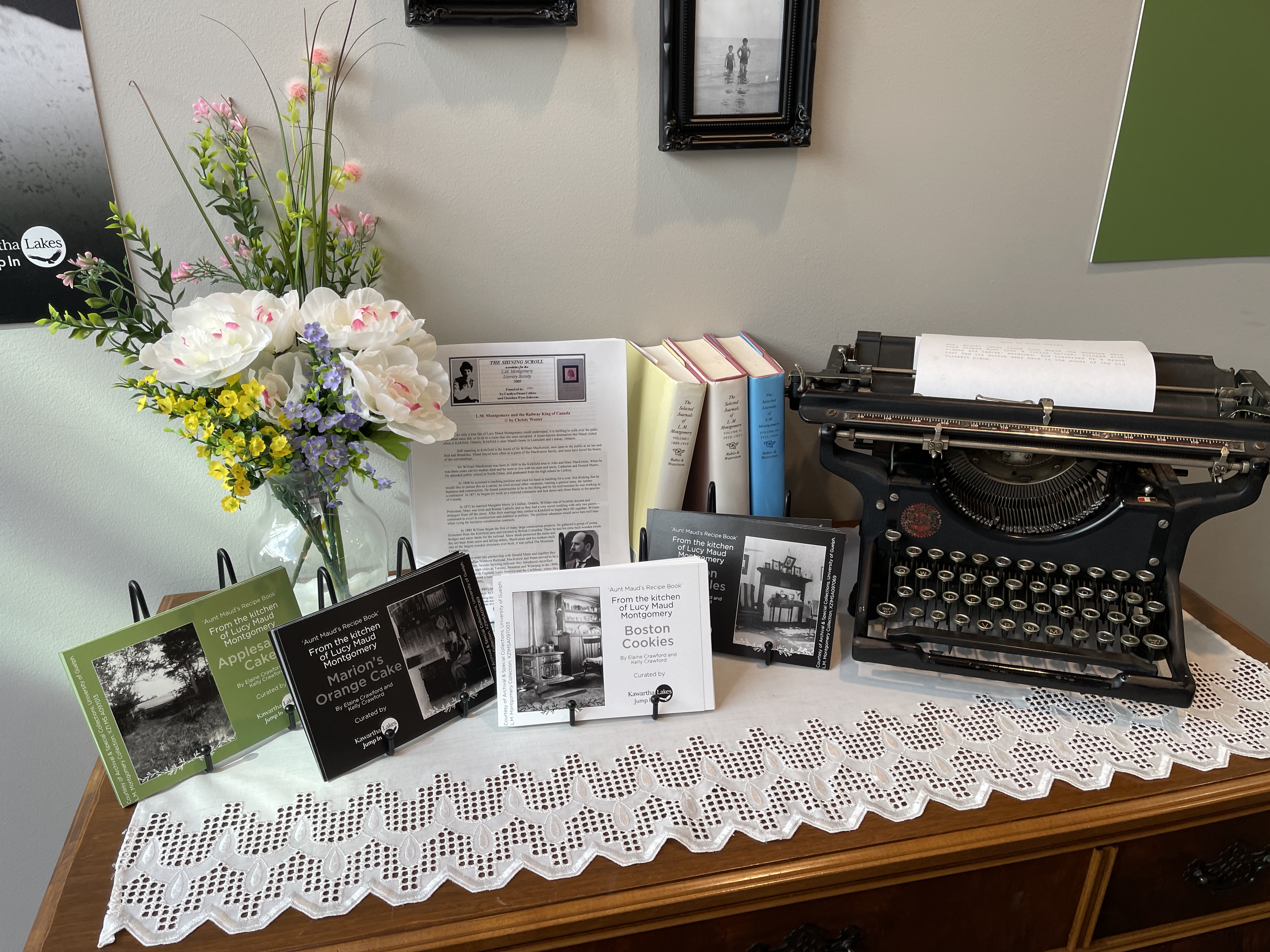
Discover the connection between Canadian literary icon, Lucy Maud Montgomery and Kawartha Lakes this summer. In commemoration of the 150th anniversary of the birth and lasting legacy of Lucy Maud Montgomery, Kawartha Lakes Economic Development – Curatorial Services proudly presents the ‘Call Me Maud’ exhibit. The exhibit is housed on the second floor of City…
In the 1920s in Bobcaygeon, there arose a constellation of writers, including some of Canada’s most decorated poets and influential newspaper editors. At the heart of this constellation was a group of men who cottaged together and were at the forefront of defining Canadian culture. And they seemed to have a hate on for Lucy…
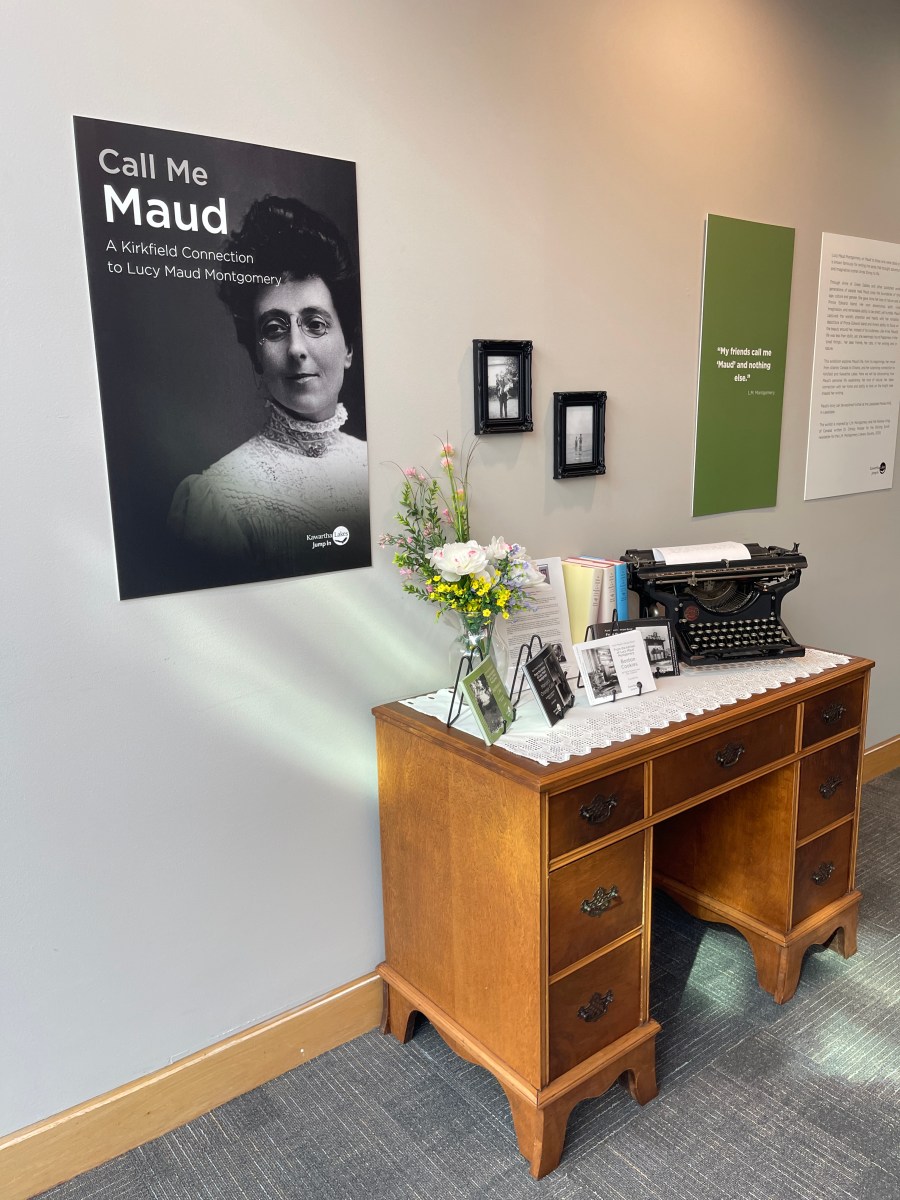
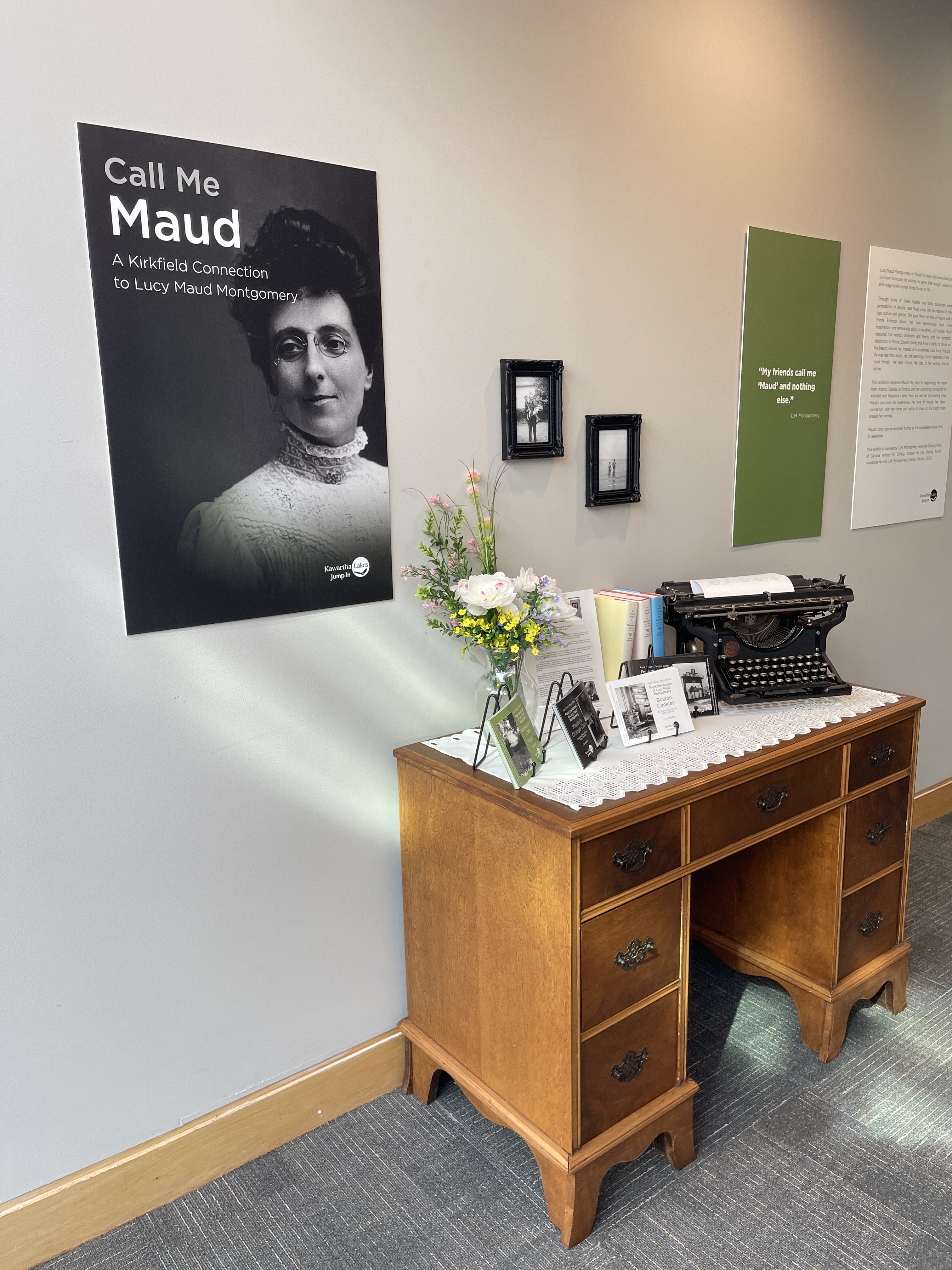
Discover the connection between Canadian literary icon, Lucy Maud Montgomery and Kawartha Lakes this summer. In commemoration of the 150th anniversary of the birth and lasting legacy of Lucy Maud Montgomery, Kawartha Lakes Economic Development – Curatorial Services proudly presents the ‘Call Me Maud’ exhibit.
The exhibit is housed on the second floor of City Hall located at 26 Francis Street in Lindsay starting July 23 and running through until November 29, 2024. Hours of operation are 8:30am to 4:30pm, Monday through Friday. Admission to the exhibit is free of charge.
You are invited to trace Montgomery’s remarkable journey from her early years in Atlantic Canada to her surprising connection to Kawartha Lakes. Discover the spirit of Montgomery’s life and literary contributions in this unique showcase, set to captivate audiences of all ages.
Famous for her writings and the impact they’ve had, particularly through her beloved character Anne of Green Gables and other published works, Montgomery’s influence goes beyond time, age, culture, and gender. The exhibition explores how Montgomery infused Anne with her love for nature and Prince Edward Island, her adventurous spirit, vivid imagination, and her remarkable ability to find beauty amidst life’s challenges. Like Anne, Maud found happiness in the things that were dear to her: her cats, her writing, in nature, the dear people in her life that became her kindred spirits and in the places that she would visit.
The ‘Call Me Maud’ exhibit takes inspiration from Dr. Christy Woster’s article in the Shining Scroll newsletter of the L.M. Montgomery Literary Society from 2005, titled ‘L.M. Montgomery and the Railway King of Canada’. In her article, Woster expressed the excitement of experiencing places and rooms that Lucy Maud Montgomery once knew well. One such place was Kirkfield, Ontario, a lesser-known but visited destination by Maud.
2024 marks the 150th anniversary of the birth and legacy of author Lucy Maud Montgomery. Canadians coast to coast will gather in various ways to celebrate and honour the beloved Canadian author. Kawartha Lakes Economic Development, with support from the Kirkfield and District Historical Society and Museum, invites you to join them on Sunday, August 18…
In the 1920s in Bobcaygeon, there arose a constellation of writers, including some of Canada’s most decorated poets and influential newspaper editors. At the heart of this constellation was a group of men who cottaged together and were at the forefront of defining Canadian culture. And they seemed to have a hate on for Lucy…
In the 1920s in Bobcaygeon, there arose a constellation of writers, including some of Canada’s most decorated poets and influential newspaper editors. At the heart of this constellation was a group of men who cottaged together and were at the forefront of defining Canadian culture. And they seemed to have a hate on for Lucy Maud Montgomery.
It all started with Arthur L. Phelps, who came to Bobcaygeon as a youth, again as a minister, and finally bought a cottage in 1919. He invited the friends he’d made at Victoria College in Toronto to visit him during the summers. They fell in love with the area on the banks of the Sturgeon Lake, and some bought cottages of their own, while others became regular visitors.
[Arthur L. Phelps] was part of a group of men who spent their summers in cottages at Bobcaygeon, Ontario, where their families socialized and the men themselves talked over their ideas about the state of Canadian literature, world literature, and politics. This group included other academics, journalists (like [William Arthur] Deacon), and writers invited to join them (like Frederick Philip Grove).”
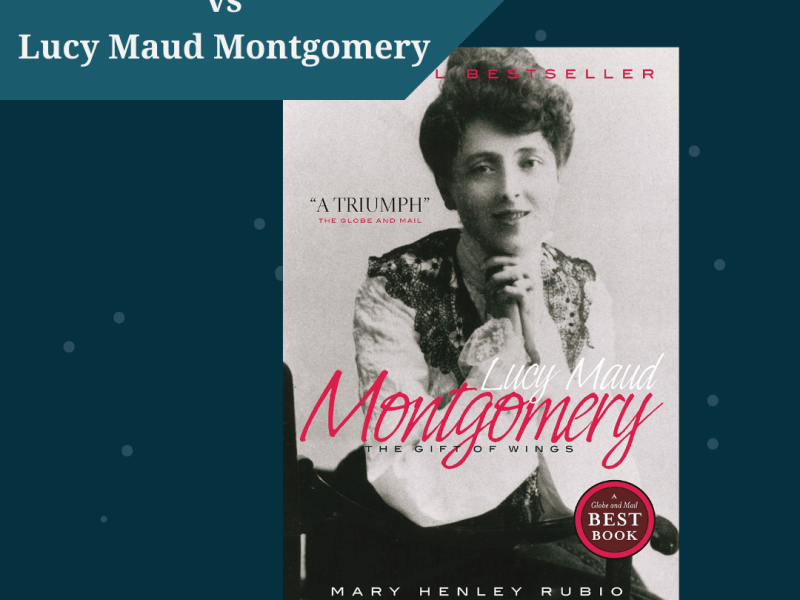
Lucy Maud Montgomery: the gift of wings. Mary Henley Rubio. 2008.
The next to snap up a cottage was E.J. Pratt, the three-time winner of the Governor General’s Award for Literature for his poetry. After visiting Phelps, Pratt fell in love with the place. Pratt had a grand old time in Bobcaygeon. He established a garden, built a writer’s shed on the shore where he composed most of his poetry for the time while he owned the cottage, and hosted many guests.
The next to buy a cottage was William Arthur Deacon, who became Canada’s first full-time book reviewer, fulfilling one of his life’s ambitions, as editor of Saturday Night magazine and the Globe and Mail.
“ln 1925, for $400 in easy instalments, they also acquired a piece of land at Bobcaygeon, in the Kawartha Lakes district near Peterborough, a part of the summer colony that included the Pratts and the Phelps.” (“William Arthur Deacon: A Canadian Literary Life.” Clara Thomas and John Lennox. 1982)
In those days, writers and poets alike joined the Canadian Authors’ Association (CAA), where membership afforded connections to other writers, along with workshops and other learning options, to say nothing of publishing opportunities in the organization’s anthologies and magazines.
For many, writing is a solitary profession, and organizations such as CAA are a lifeline, giving writers the chance to get out and commiserate and network with other people who can immediately empathize, no explanation needed.
Where a chapter of the CAA did not exist, many writers opted to create one, as Deacon did when he lived in Winnipeg.
At the same time, the sources of literature and radio in Canada were primarily Britain and America, and there arose a need to produce and promote Canadian content. This became a highly debated topic, as no definition of “Canadian” had been made, but in very short order, a plethora of Canadian literature was produced and the CBC was created.
In addition to his professorship duties, Phelps became host to a number of CBC programs that debated and defined Canadian culture, broadcasting throughout his career, even from his deathbed in 1970.
Deacon, in his editorial positions, decided which books got reviews and which were passed over. And Deacon was instrumental in the creation of the Governor General’s Award for Literature, and which Pratt won three times. Other visitors to the cottages also won this prestigious prize and cash award.
When it came to Lucy Maud Montgomery, this crew from Bobcaygeon did not feel her work was worthy of inclusion as part of the nation’s culture, nor as being worthy of winning a prize.
They excluded Montgomery’s work because it was written for children and well-loved by girls and women all around the world. They were jealous of her sales numbers– which none of them had achieved more than a fraction in comparison.
Their jealousy and misogyny frustrated Montgomery. When she ran for president of the Toronto branch of the Canadian Authors Association and learned she was up against Deacon, she withdrew because she knew of his connection to the Bobcaygeon crew and how vast this network extended.
It does not matter in the least to me that I am not on the executive. Deacon has always pursued me with malice and I am glad I will have no longer to work with him. He is exceedingly petty and vindictive and seems to be detested by everybody who knows him.
L.M. Montgomery (Rubio, 2008)
On the occasion of Canada’s National Book Week in September 1935, the Toronto branch of the CAA hosted an event to celebrate those who had received the Most Excellent Order of the British Empire (OBE) that year; advertising stated the occasion would honour “three knights and two OBEs”: Sir Ernest MacMillan, Sir Wyly Grier, Sir Charles G. D. Roberts, L.M. Montgomery, OBE, and Dr. E. A. Hardy, OBE. It was a hugely important event for Canada’s literary scene.
One of the organizers was Pelham Edgar, a professor, and at that time, president of the national level of the CAA. Pelham was a good friend of Pratt and the other Bobcaygeon boys, had been invited to the cottage, and was no friend to Montgomery. Pelham proposed a toast to each of the five honourees. He spent considerable time delving into the accomplishments of the first three, and then finished with “The other two who are included in this toast are Dr. Hardy and Mrs. Macdonald.”
Montgomery’s biographer, Mary Rubino, supposes Maud could have been overly sensitive since a knighthood is a higher award than an OBE, but Montgomery was certain that it was a snub and that if Edgar had stopped to sing the praises for Hardy, he would have had to admit that she was of literary merit. She believed Edgar “would have died any death you could mention rather than admit I represented Canadian literature.”
A write up in the Globe corroborates Montgomery’s version of the event. After being toasted, each of the five made replies, but the write up by Deacon in the The Mail and Empire omits any mention of Hardy’s and Montgomery’s replies. It’s as though the Bobcaygeon boys had decided Montgomery simply didn’t exist.
By this time, Montgomery had shifted to writing books for adults, including A Tangled Web and The Blue Castle, sales had slowed, and her work was called “provincial” at a time when books were prized for being “cosmopolitan” and favoured for having “universal” themes. For a while, The Blue Castle was banned.
This was the beginning of Montgomery’s descent from publishing. She was a victim of the Bobcaygeon boys’ bullying that became cultural programming that ascribed “literary” works as better than “commercial” works.
Had any of them even read her work?
No.
At least not while she was alive.
When Phelps wrote his book, Canadian Writers (1951), he included a chapter about Montgomery, but proceeded to call her work “naïve” and “easy reading” that “lacks realism and penetration.” In fact for most of the chapter, he didn’t mention her work much at all, but wrote about other writers: Robert W. Service, who had his own chapter, and Mazo de la Roche. He said Montgomery’s readers were “nostalgic” and “sentimental” and only for “the uncultured and unsophisticated.” Finally, the last two pages of the chapter covered Montgomery and her work. He checked out her books from the library, where he was told not to keep them too long as they were in high demand. He finally read the Anne novels, and decided “there may still be a place for the stories of L.M. Montgomery.” He ended the chapter with “get a copy of Anne of Green Gables by L.M. Montgomery and read it.” Unfortunately, Montgomery had passed away in 1942, wanting to believe she had a place in Canadian literature, but never actually achieving it until after the deaths of the Bobcaygeon boys.
But even today, the idea that “literary” fiction is superior to “commercial” fiction lingers. The literary community still has much work to do to detangle this particular net cast by the Bobcaygeon boys and their constellation of friends.
Further Reading:
Phelps, Arthur L. Canadian Writers. McClelland and Stewart Limited. 1951.
Rubio, Mary Henley. L.M. Montgomery: The Gift of Wings. Doubleday Canada. 2008.
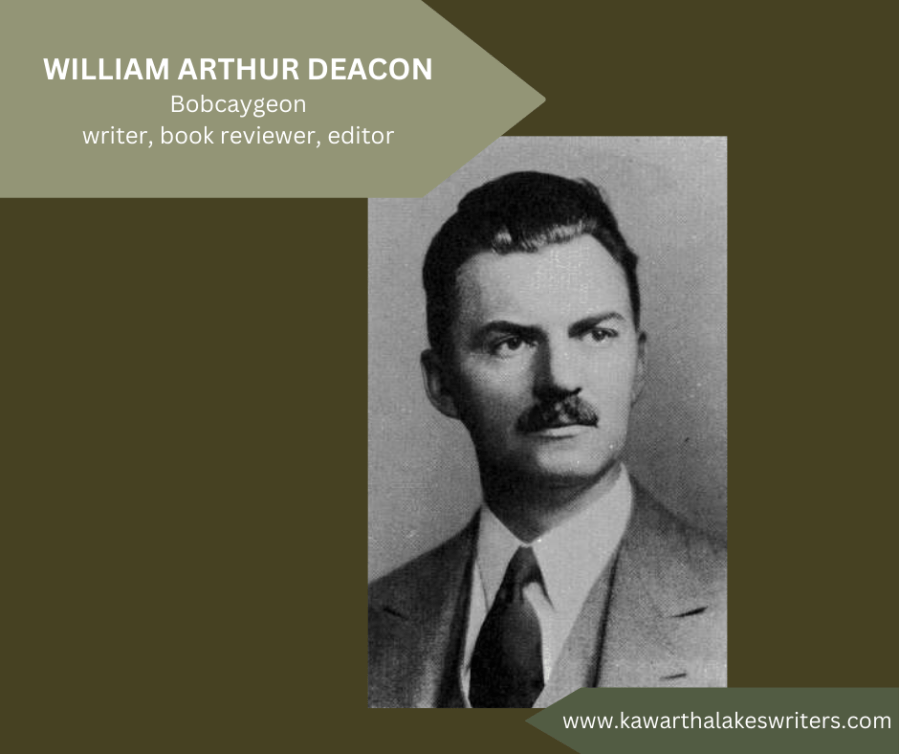
William Arthur Deacon (1890-1977) was one of the most powerful and influential writers/editors in Canada from 1922-1961. He could make or break authors’ careers. And he did.
Image source: Trent University
Born in Pembroke on 6 April 1890, the son of William Henry Deacon, a lawyer, and Sarah Ann Davies, daughter of a printer. His father died when he was very young. His mother moved in with her parents.
Deacon studied law at Stanstead College, but while there, two things happened that changed his intended career path, both literary readings, and each inspiring to Deacon. And then in 1905, he read his own first paper to the college literary society and from that moment, never lost the desire to write– or get a reaction from an audience.
In 1907, Deacon entered Victoria College in Toronto, where he met E.J. Pratt, and wrote for the campus magazine, of which Viola Whitney (future Mrs. E.J. Pratt) was the editor. He also met another life-long friend in Arthur L. Phelps, who went on to become Canada’s foremost culture critic. But Victoria College wasn’t working for Deacon, and he left during his second year.
Deacon drifted through various jobs until finally deciding to marry Gladys Coon of Weston, Ontario, and return to Dauphin, Manitoba, where he could article in law. Later in life, Deacon would look back on these years as ‘the ten lost years’ of his life, given to the law career he ended up not pursuing.
Around 1916 Deacon and Gladys discovered theosophy, and eventually founded Winnipeg’s second lodge. Deacon felt theosophy and Methodism converged nicely in their teaching responsibilities.
He truly believed that the printed word could change the world. He held as axiomatic the belief that Canadians were a vital and dynamic people who would require, demand, and produce a correspondingly dynamic literature. He came to see himself as herald, prophet, preacher, and custodian of that literature.
Clara Thomas and John Lennox. William Arthur Deacon: a Canadian literary life. (1982)
He found law boring and frustrating; theosophy convinced him that he was destined to write.
In 1921, the Manitoba Free Press employed Deacon as a contributing editor to their newly established monthly literary and book review section. They called him their ‘Honorary Literary Editor.’ This was novel; up until 1921 Canadian newspapers didn’t care about books. Only about a dozen printed book reviews.
Deacon submitted book reviews and editorials to The New York Times, The Stairway, the New York Evening Post, and The National Pictorial, to name a few.
He helped found the Winnipeg branch of the Canadian Authors’ Association.
But his big break came in 1922 when he joined Saturday Night magazine and achieved his dream of becoming ‘the first full-time, professional book reviewer that Canada had ever seen.’
It also coincided with the end of his marriage to Gladys. In 1918 he met fellow theosophist, Mrs. Sally Townsend Syme, and the two believed they were destined for each other, despite both already being married. They continued to correspond with each other until 1922 when Sally joined Deacon in Toronto.
After Deacon moved to Toronto, he and Sally became frequent guests at his friends’ cottages in Bobcaygeon. Phelps was the first to establish a cottage there, followed by Pratt in 1921. Finally, in 1925, in $400 instalments, Deacon acquired his own Bobcaygeon land, and by 1928 had built a cabin on it.
Phelps helped Deacon make connections in their literary circles. He helped Deacon get the job with Saturday Night magazine. He introduced Deacon to Lorne Pierce of Ryerson Publishing, who then picked up Deacon’s books, Pens and Pirates and Peter McArthur. Phelps took Deacon to the Arts and Letters Club, bringing him to a wider literary network.
Deacon gave up his Bobcaygeon cottage by 1932, when he heard about the Canadian Institute on Economics and Politics held annually at Geneva Park, Lake Couchiching, and began spending summer vacations at Wilson’s Point, Orillia, merely four miles from Geneva Park– he gave up the Bobcaygeon cottage to continue to pursue his belief that he could change the world.
Deacon and Pratt family in Bobcaygeon. c 1930.
Deacon was now professionally placed where he could make or break an author’s career.
His friend, Arthur Phelps wrote to him: “I’ve backed three horses, Deacon, Pratt, and Grove. Place ’em in Canadian Literature, will you?” (William Arthur Deacon, page 67)
His reviews of Pratt’s work was favourable.
And same for Grove. When Grove’s book, Settlers of the Marsh, became the subject of a book ban and the author poise to go bankrupt, Phelps asked Deacon to find speaking engagements for Grove in Toronto. Two years later, Deacon sent Grove on a speaking tour across the country, using his contacts with the Canadian Club and the publicity department for the Canadian National Railway.
Grove is just one example of a Deacon-made career. But not all authors got the white glove treatment.
Deacon had a particular problem with Lucy Maud Montgomery. Jealousy, likely. His books sold only a few hundred copies, while hers were being translated and sold around the world. In his essay on Canadian literature in his book, Poteen, he says, “As for the ‘girls’ sugary stories begun with Anne of Green Gables... Canadian fiction was to go no lower.” He had a set idea of what Canadian literature should be and Montgomery was not it.
Lucy Maud Montgomery received a similarly misogynist response when she was running for the executive of the Toronto Branch. Montgomery’s biographer Mary Henley Rubio notes that “The Canadian Authors Association had been very important to Maud after [her] move to Toronto. The CAA was a lifeline, in fact, that pulled her out of her personal stress at home” (p. 529). On April 8, 1938, however, at an election for a new executive, Montgomery was pushed out by Deacon. She writes in her journal: “The election of a new executive was held and I was elbowed out. It is not worthwhile going into details. Deacon had it all planned very astutely and things went exactly as he had foreseen. I at once withdrew my name from the list of candidates” [Mary Henley Rubino, Lucy Maud Montgomery: the gift of wings. 2008. p. 530]. …. If this is the treatment received by authors of their stature, one can only imagine the treatment accorded to amateur writers in the association
Christopher M. Doody. “A Union of the inkpot: the Canadian Authors’ Association, 1921-1960.” 2016.
Deacon was completely dedicated to his non-commercial, literary and democratic principles.
He played a primary role in the establishment of the Governor General’s Awards for Literature and had influence over the judges and titles selected. His friend E.J. Pratt won three times. His friend Fredrick Philip Grove won once. E.K. Brown, another of the Bobcaygeon Boys’ visitors, won once. Arthur R.M. Lower, who was Arthur L. Phelps’s biographer, won a couple times. Laura Salverson, who corresponded with Deacon for years, won once. His personal friend Stephen Leacock won in 1937. Bertram Booker, Franklin Davey McDowell– the list goes on of Deacon’s friends who took home Canada’s top literary prize.
Deacon loved leadership and the feeling of power to influence events; he also loved to be seen to be leading.
He recruited his friends to write book reviews, including his wife writing as Sally Townsend, E.J. Pratt, Viola Pratt, Arthur Phelps and many others.
His review philosophy was solid and many of today’s reviewers could stand to learn a thing or two:
But NEVER put on a [heading] which will keep readers from reading your article. The chief function of man may be to glorify God; but the chief function and aim of a writer is to get himself read. Put on a [heading] which will entice your reader, rouse his curiosity, tempt him to plunge into the text below. Don’t drive him away by proclaiming that the whole thing is a bore. You break that gently to him later.
William Arthur Deacon, page 220.
In 1967, Sally was diagnosed with Parkinson’s Disease. She passed away two years later. Deacon was unable to do any serious writing after Sally’s illness, even withdrawing his centennial grant application. Over the next years, he suffered small strokes until he passed away in August 1977.
Editor:
Saturday Night (1922-1928)
Toronto Mail and Empire (1928-1936)
The Globe and Mail (1936-1961)
Books:
Pens and Pirates (1923)
Poteen and other essays (1926)
The Four Jameses (1927)
My Vision of Canada (1933)
Further Reading:
William Arthur Deacon: a Canadian literary life. Clara Thomas and John Lennox. University of Toronto Press. 1982.
E.J. Pratt: the truant years. David Pitt.
photo source of Deacon and Pratt family: Trent University:
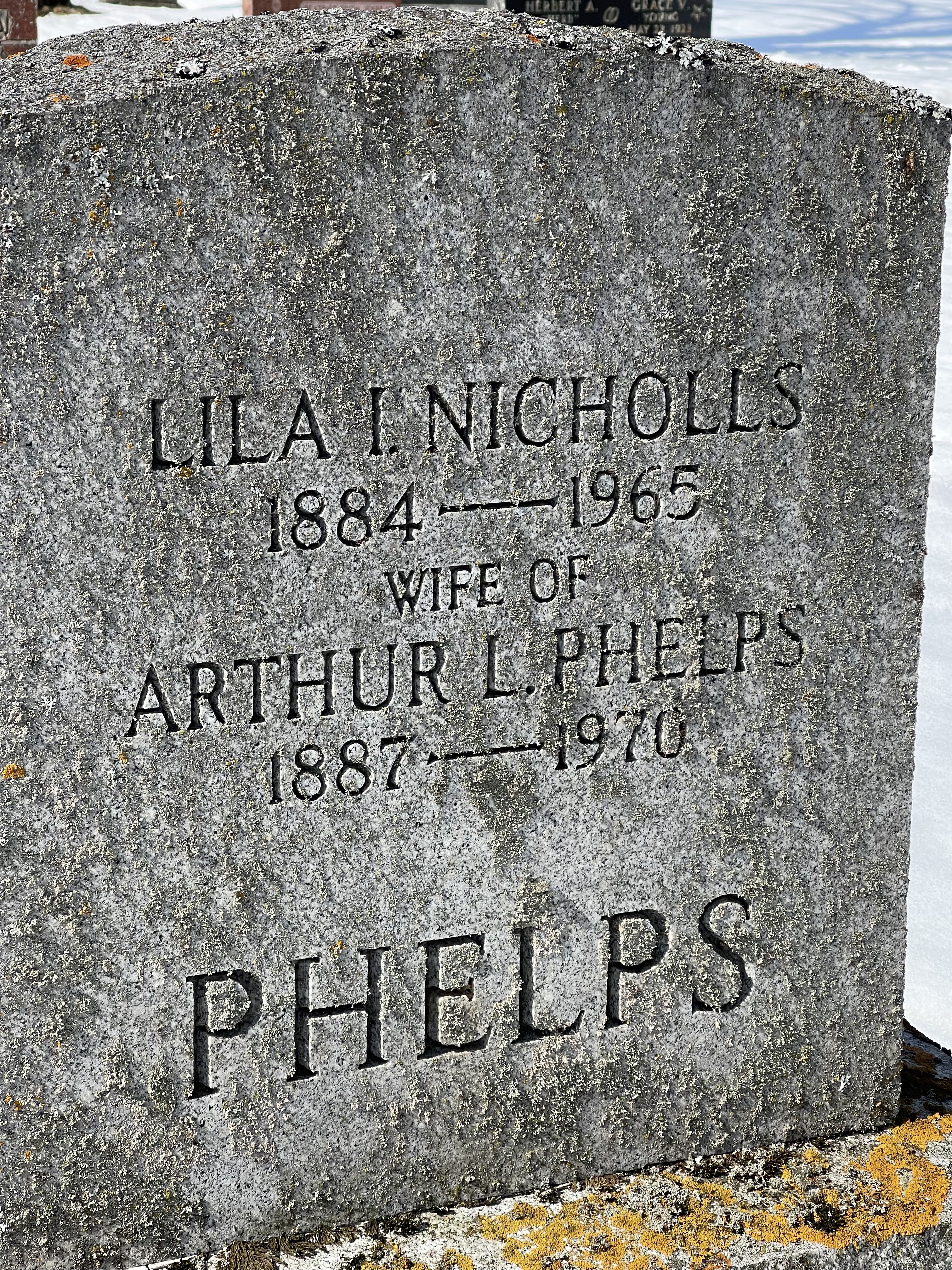
Arthur Leonard Phelps (1887-1970) was born in Columbus, Ontario on 1 December 1887, and in his lifetime moved around, but for a number of years he had a Bobcaygeon cottage. His ‘chap-book’, “Bobcaygeon: a sketch of a little town,” was published in Lindsay in 1922. Through his editing work and hosting a CBC radio show, Phelps influenced the development of a Canadian identity and was well-known as a critic of Canadian culture.
Phelps studied at Victoria College at the University of Toronto, where he met fellow writer, E. J. Pratt, and they became life-long friends.
Sometime within the next few years, he bought a cottage in Bobcaygeon and lived there permanently. The April 1919 edition of Canadian Bookman described Phelps as “permanently a denizen of Bobcaygeon, Ont., but his ministerial function in connection with the Methodist Church keeps him supplied with a temporary address, which happens just now to be Bath, Ont.”
On 18 September 1914, Phelps married Lila Irene Nicholls, daughter of Thomas Henry Nicholls, a farmer in Verulam township, and Margaret Staples. Phelps and Lila were wed in Peterborough, Ontario.
In 1921 Phelps accepted a professorship at the Wesley College at the University of Manitoba where he was head of the English department. A year later, he asked his friend, and fellow KL writer, Watson Kirkconnell to work with him. At first Kirkconnell refused because English wasn’t his field of study. He studied the Classics at university. But then he changed his mind and accepted the position. Together they were the entire English department, with Kirkconnell teaching anything Phelps didn’t want.
During this time, Phelps kept the cottage at Bobcaygeon and spent his summers there. (Kirkconnell, A Slice of Canada: memoirs (1967).)
A visitor to the Bobcaygeon cottage crew was friend and fellow writer, Fredrick Phillip Grove. Grove named his son Leonard after Phelps and made Phelps the boy’s godfather. (“Afterword: genesis of a boys’ book.” Mary Rubino, 1982)
While at Wesley College, Phelps started the English Club, a discussion group for senior students, one of whom was Margaret Laurence. (Later, Laurence would move to Lakefield and become Chancellor to Trent University.)
Phelps stayed at Wesley College until 1945. He was awarded Fellowship in 1967.
Starting around 1940, Phelps was a radio broadcaster for the CBC, serving as a culture critic, trying to define a cultural identity for Canada. It was around this time when Canada was trying to define its own cultural identity as separate from Britain and the U.S.
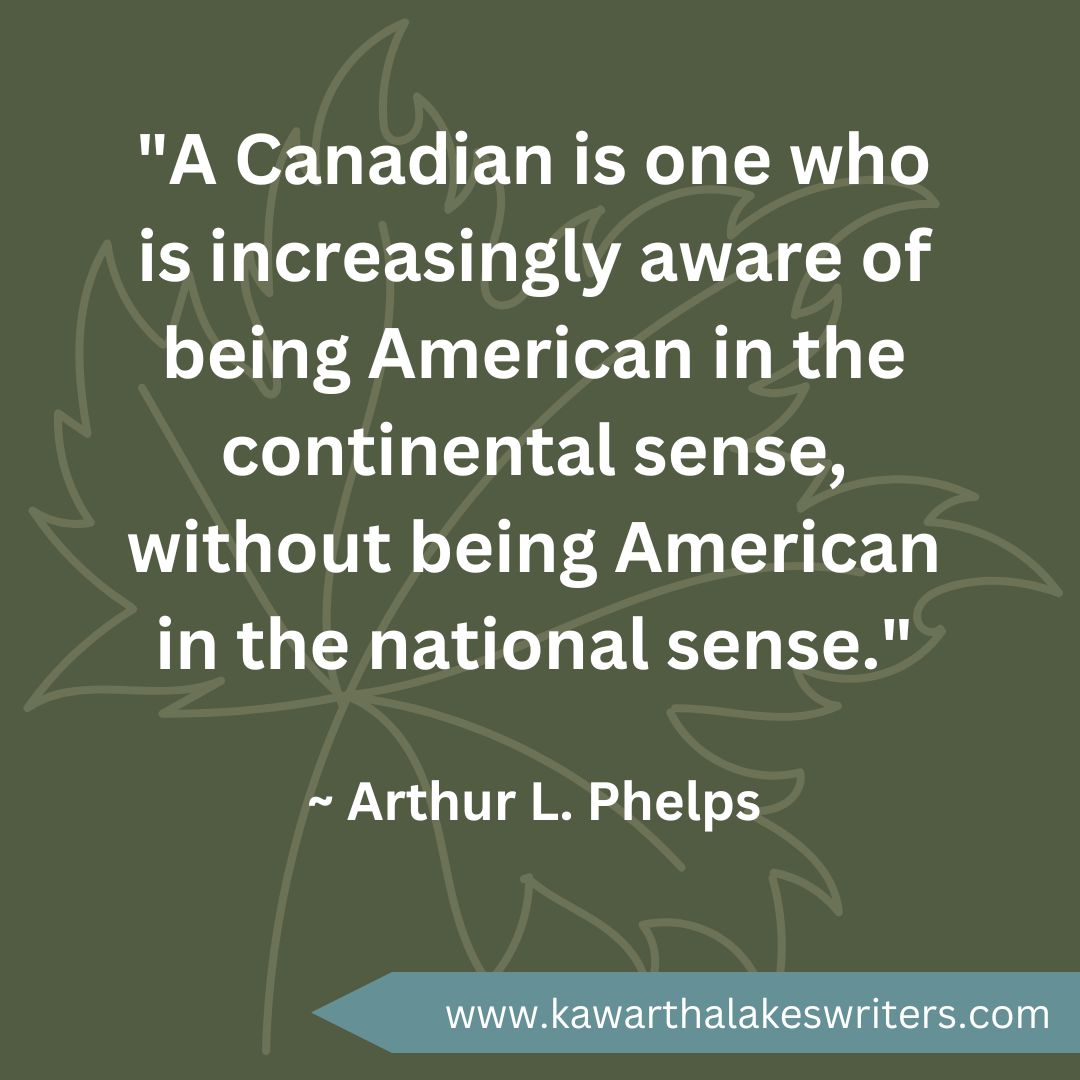
Phelps has been widely quoted for saying, “a Canadian is one who is increasingly aware of being American in the continental sense, without being American in the national sense.” (The quote is from an article he wrote for The Listener, a BBC magazine, titled, “A Canadian looks back on the Royal Visit,” published in the 46th volume on Thursday, November 15, 1951.)
In 1947, Phelps became an English professor at Queen’s University, and while in Kingston, he hosted a radio show.
In the summer of 1955, Phelps hosted a television program called “Cabbages and Kings.” Phelps moderated the panel discussion show from Vancouver. Participants and subjects included Northrop Frye on Canadians’ reading habits; CJOR newsman Jack Webster and lawyer Bill McConnell on television and radio; and McConnell, writer Roderick Haig-Brown, and Hugh Christie, warden of Oakville Prison Farm on crime and society.
Unfortunately, Phelps did not include the work of the iconic Lucy Maud Montgomery as significant to the culture and identity of Canada. At least not while she was alive to be included. Nine years after her death, Phelps included Montgomery in his book, Canadian Writers, listing her accomplishments alongside other writers as E.J. Pratt, Robert W. Service, Frederick Philip Grove, Archibald Lampman, Stephen Leacock and other notables. The first half of his Montgomery article discusses other “popular” fiction writers and their place in “respectable artistic achievement,” indeed, the entire issue with Montgomery’s work until now was that it was commercially successful and written for girls. In this article, Phelps admits he’d not read Montgomery’s work before and when he checked out four of her books from the library, he was reassured to find her work was still popular. Phelps finally gets around to writing about Montgomery and her work in the last two pages of the article.
Phelps missed the mark on the draw of Montgomery’s work, though. He called her writing old fashioned, sentimental, nostalgic, and said, “L.M. Montgomery’s stories have qualities of range and subtlety and fine comprehension which make them relatively worthy.” He said, “the Island, the sea, the people of the Island, come alive in the telling. All this came about because L.M. Montgomery knew her Island– its places, its people– and, with direct unpretentious simplicity, through her an, was able to communicate something of what she knew.” (Canadian Writers, 1951.)
But Montgomery does not remain commercially successful even today because of nostalgia or because she knew the Island and its people. She remains popular because she gave girls a hero in Anne. She remains popular because Anne showed girls that it was okay to be angry and to feel alone.
It’s unfortunate that the fight between “commercially successful” and “literarily relevant” remains today.
Phelps’s first wife, Lila died in 1965. Phelps remarried in 1968 to Margaret Duncan. The 1921 census shows Phelps and Lila living with his parents in the Toronto area. They didn’t have children at that time. His obituary mentions his daughter Ann, married to John David Hamilton. The University of Manitoba notes the Phelps fonds were donated by his granddaughters, Meg and Kate Hamilton in 1997.
After Phelps was diagnosed with cancer, he was allowed to continue his radio show from his sick bed. He passed away April 27, 1970 at his home at 47 Earl Street in Kingston and was buried in Bobcaygeon. (Globe & Mail, 29 April 1970 page 41.)
Works:
Poems (1921)
Bobcaygeon: a chap-book (1922)
The Poetry of Today. (1917)
This Canada: A series of broadcasts. (1940)
These United States: A series of broadcasts. (1941)
Community and culture. (1947)
Canadian Writers. (1951)
“Introduction” for Habitant Poems by William Henry Drummond (1961)
There’s a wealth of Phelps’s work at Canada’s Library and Archives, particularly in the archived Film, Video and Sound collection.
In 1971, Arthur R. M. Lower published a brief biography of Phelps, “Arthur Leonard Phelps (1887-1970),” a chapter in the book, Proceedings of The Royal Society of Canada, series IV, volume IX, 1971, pages 94-96.
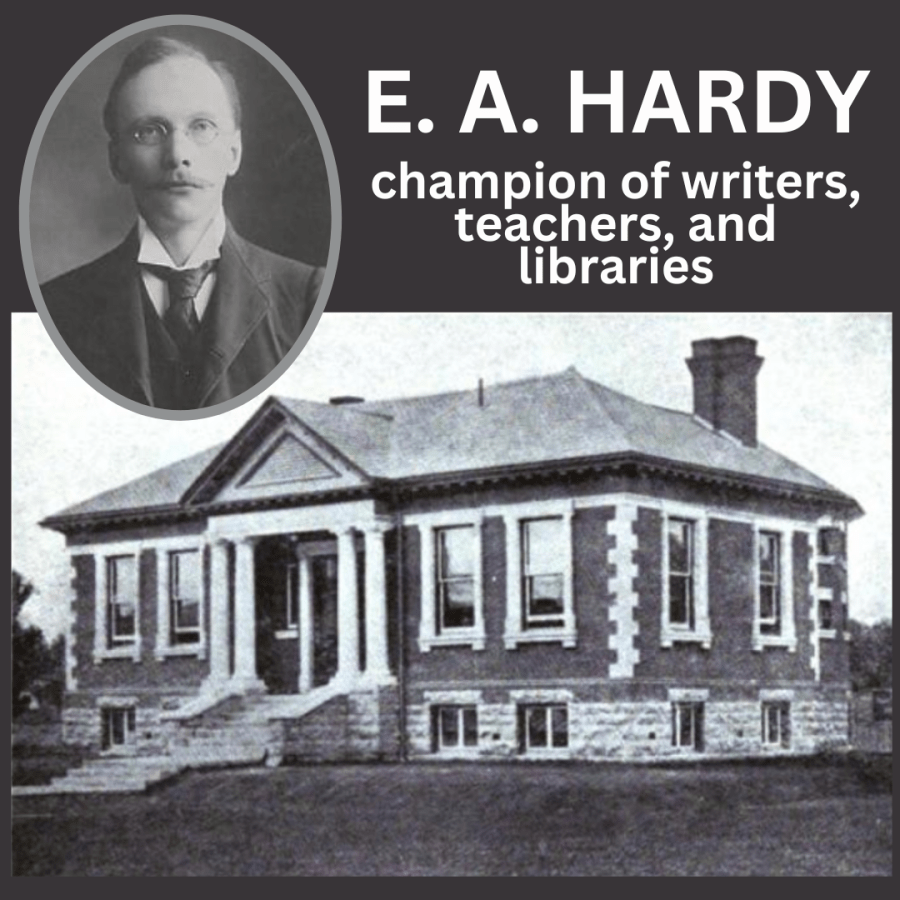
E.A. Hardy, detail from Twenty Club portrait, Kawartha Lakes Museum & Archive
E. A. Hardy (1868 – 1952) was an educator and secretary of both the Ontario Library Association and Canadian Authors Association. In 1935, for services to education in Canada, Hardy was awarded Officer Order of the British Empire.
Library
While he lived in Lindsay, he campaigned for the town to start a public library and pass the by-law that brought free library access to Lindsay. In 1898, Hardy’s letters to the Canadian Post pointed out that adding a library to a town was attractive to new citizens and “that many a family has passed by one town and gone to another on account of its schools or some other excellent feature.” He appealed to Lindsay’s sense of family:
It is a serious problem to train up a family, and our streets at night afford only too good evidence that the problem is not being solved in many a home. No doubt home is not as attractive in many cases as it might be, and a large supply of good books, free of access to all members of the family, would go far to make home decidedly more attractive. In more than one case, if a boy had his choice between the streets and a good book he would take the book.
Canadian Post, 1898
Hardy’s passion for public libraries and success with bringing a library to Lindsay became well known, inspiring other municipalities across Ontario. His championship has been written about extensively by Lorne Bruce in Free Books for All: the public library movement in Ontario 1850-1930 (1994) and in Hardy’s own book, The Public Library: its place in our education system (1912).
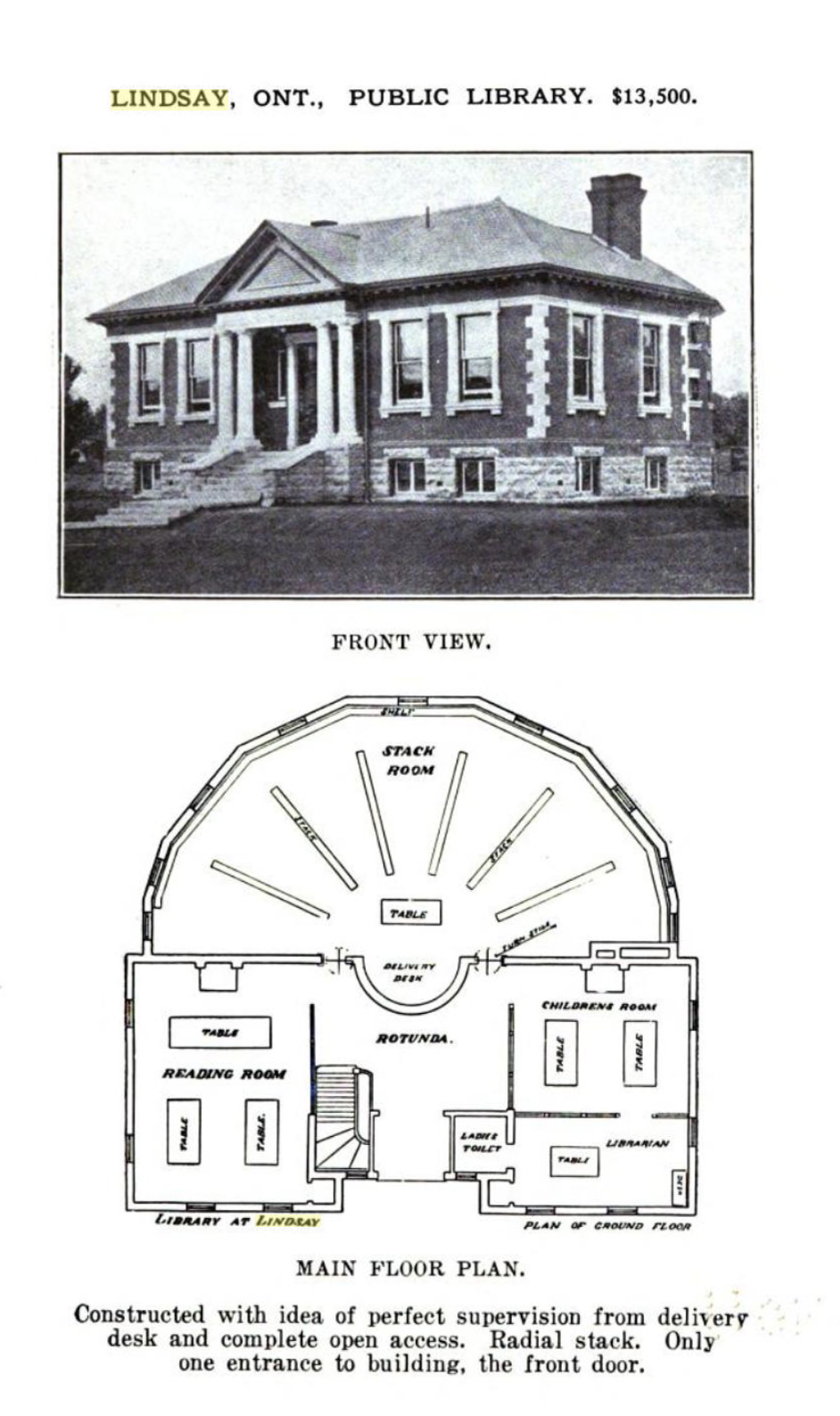
Hardy, The Public Library: its place in our education system (1912)
Although Hardy believed this to be ideal layout for a public library, James Bertram, who was personal secretary to Andrew Carnegie, did not. Bertram deemed the round rooms to be a waste of space. Lindsay’s half-circle design was one of the last with a rounded room and is one of the few such buildings still standing.
Hardy’s passion for libraries didn’t stop with Lindsay. Hardy is credited for the idea of what became the Ontario Library Association, a network of libraries across the province for the purpose of educating library workers. He served as president of the organization in 1925-26.
Poetry
Hardy’s work for the creation of Selections from the Canadian Poets (1909) is held at the Thomas Fisher Rare Library at the University of Toronto, including correspondence with Lucy Maud Montgomery:
The [Thomas Fisher Rare Library] holds a wonderful Montgomery letter within the Edwin Austin Hardy Papers. Hardy was an Ontario teacher and school administrator, and secretary of the Canadian Authors’Association. His collection consists primarily of correspondence pertaining to an anthology of Canadian poetry he was editing – Selections from the Canadian Poets, published in 1906 – and his secretarial duties for the Association. In what appears to be a response to a letter Hardy wrote to Montgomery – most likely after the publication of Anne of Avonlea (1909), given Montgomery’s letter is dated late September 1909 – she writes that a novel of ‘Anne the College girl’ will most likely never materialize. For one, Montgomery claims she does not have the ‘sufficient experience of college life’ to write about it. More to the point, she also writes that ‘after thinking and writingAnne for over three years I’m actually sick of her.’
“Strength in Numbers: the CanLit community” by Natalya Rattan and John Shoesmith, 2020
Of course Montgomery did go on to write more about Anne, but it’s worth noting that she felt what many writers feel, especially those who write long series, and it’s interesting that she confessed this feeling to Hardy.
In 1935, the Montreal branch of the Canadian Authors Association had been running a successful annual poetry contest. They appointed a committee to see if publishing a periodical would be financially feasible. Disappointed by the results, they decided to not go through with the project. Hardy heard about this and urged the national executive to take on the project as a means of doing something for the entire membership. They agreed and the first issue of Canadian Poetry magazine was published in 1936. Bobcaygeon cottager, E. J. Pratt was appointed editor. The magazine continued to be published until 1968 when it merged with Canadian Author and Bookman. (“A Union of the Inkpot: the Canadian Authors Association, 1921-1960” by Christopher M. Doody, 2016)
Biography
The following is from the book Hardy and Hardie: past and present (1887), in which Claude H. Hardy recorded the history of the extended family and gives a thorough biography of E.A. Hardy:
Edwin Austin, b. at Laconia, N. PI., 30 Aug. 1867 ; m. 6 Jul. 1891, Annie Florence Everett.
Hardy was a small boy of three years when he moved with his parents to Guelph, Ont., Canada, where he started on his educational career as a youngster at school. From the very first day of attendance upon instruction it was apparent that this lad would make a name for himself educationally, for books and everything literary appealed to him. But he was destined to be more than a scholar. His love of people and his genius for leadership and organization have made him a “man among men” and one of Canada’s leading educators.
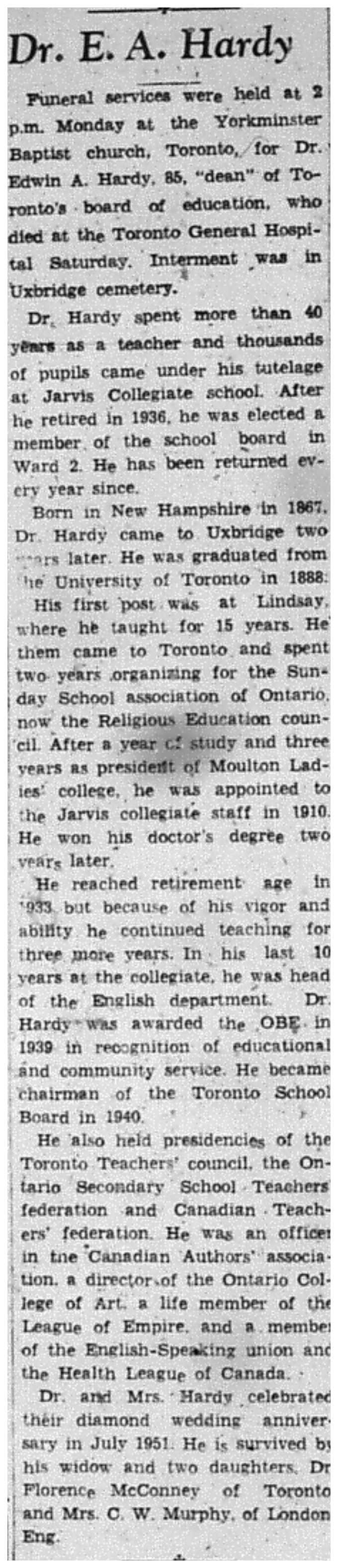
For sixteen years he was English Master at the Lindsay Collegiate Institute at Lindsay, Ont. Since 1910 he has been on the faculty of the Jarvis Collegiate Institute at Toronto, and is Head of the Department of English. Although he has given more than forty years of his life to educational work, and has earned retirement from active service, he is looked upon by his associates as one of the most vigorous and dynamic personalities of the profession today. He has been honored on many occasions, as will be seen in a summary of his career below. He recently retired as editor of The Bulletin, the official publication of the Ontario Secondary School Teachers’ Federation, and the following tribute was paid to him in the February, 1935, issue :
After eight years as editor of the Bulletin , Dr. Hardy retired. At the December Meeting of the Federation he was unanimously and enthusiastically made Honorary Life Member on the Executive. No honor was ever more deserved. No man in Ontario has done more during the past forty years to raise the status of the teacher with the public and to give teachers increased respect for their own profession. He was one of the first to obtain the doctor’s degree in Pedagogy. He was one of the first to realize the value of organized co-operative effort. He was one of the founders of the Toronto Teachers’ Council of our own Federation and of the Canadian Teachers’ Federation. Of each of these organizations he became president. He has become known far beyond our own Dominion and since 1927 has been Treasurer of the World Federation of Education Associations. In every province and in many countries he has represented the teachers of Ontario with a dignity and a charm that reflected most favorably on his own province. At all times he has wisely advocated the closest co-operation between teachers and trustees and the Department of Education. The Fireside Conference of last winter was a unique and successful demonstration of his resourcefulness in this direction.
His wide interests have indirectly helped the profession, no less effectively perhaps, than his more direct activities. He has been Secretary and President of the Ontario Library Association, National Secretary of the Canadian Authors’ Association, and President of the Toronto Branch of that association, President of the Ontario Sunday School Association, and Chairman of the Council of the Ontario College of Art. A few days ago Yorkminster Baptist Church where he has been active as associate S. S. Superintendent for more than 25 years elected him a life deacon.
In all his work his method has been “suaviter in modo, fortiter in re.” His courtesy in debate has not diminished his resolution in the advocacy of policies he approves. He has done much in the past but he always presses on towards a higher mark. For the profession he has a fair vision which it would be well for us all to capture : a Headquarters Building, a professional library, a Travel Bureau, a monthly Bulletin, higher qualifications for secondary teachers, a full-time secretary for our federation. How he has survived his many duties is a source of wonder to those who know best what hard work some of these duties involve. May he long continue to give inspiration to his fellow teachers. May the new editors catch something of his fine spirit.
Dr. Hardy, in addition to his keen interest and active participation in educational and religious affairs, has found time to become actively engaged in other worthwhile pursuits. He is an author and literary critic. He has written several articles for magazines and periodicals in Canada, Great Britain and the United States. He is editor of Selections from Wordsworth and Tennyson. For ten years he was educational editor of the Toronto Globe. He is a member of the Incorporated Society of Authors, Playwrights and Composers of Great Britain. He is a member of the Arts and Letters Club of Toronto, vice-president of the Ontario Branch of the English-Speaking Union, vice-president of the Canadian Branch of the League of the Empire, vice-president of the Community Welfare Council of Ontario, member of the Magna Carta Association, member of the I. O. O. F., and vice-president of the Hardy Family Association.
Mrs. Hardy graduated from Moulton’s Ladies’ College at Toronto, and before marriage was a teacher. She has been actively engaged in Girl Guide work, in women’s work of various kinds, social and political, and is devoted to gardening.
Children, born at Lindsay, Ontario : i. Florence Spaulding, b. 20 Sept. 1894. She attended the University of Toronto, and graduated in arts and medicine. In 1917 she married Mr. Garnet E. McConney, a member of a family resident in the Barbados for centuries, and of Scottish descent. Dr. McConney practices medicine, and is on the staff of the Women’s College Hospital at Toronto. She is actively engaged in educational and religious work. Children : Allan Mary Robert Theila. ii. Dorothy Stanton, b. 26 Dec. 1898. She is a graduate in arts from the University of Toronto and from Oxford University, London, Somerville, College. In 1924 she married Clarence Walford Murphy, Flight Lieut., R. N., and resides in Putney, London, England.
Hardy’s impact on education in Lindsay was so profound that after Hardy left Lindsay parents sent their girls to the Moulton Ladies College.
Hardy was one of the founders of the Twenty Club, an exclusive organization in Lindsay consisting of only twenty members at a time, each of whom would take turns researching, writing and presenting an educational article. The Twenty Club was established in 1892 and remains active today.
From the Cambridge Street Baptist Church history:
In 1904 Mr. E. A. Hardy severed his connection with the Lindsay Collegiate (and the Lindsay Baptist Church), to become the Principal of Moulton College for girls. Such was his reputation in Lindsay – relates Mrs. Fred Bruce – that her mother, a staunch Methodist, sent her to Moulton, the Baptist School, because the well-known Mr. Hardy was principal. He shortly left there and became eminent in collegiate circles in Toronto. For his great educational services, he was awarded the O.B.E. in the Queen’s Honour List.
Dr. Hardy returned to Lindsay as speaker for the 50th Anniversary of the Twenty Club, which he had founded. As a former Deacon and Sunday School superintendent here, he spoke on the 75th Church Anniversary to combined Morning Congregation and Sunday School.











 kawarthalakeswriters.com