W. G. Hardy was a writer, professor and hockey administrator. Born and raised on a farm called “The Elms” near Lindsay, Ontario, to parents George and Annie, Hardy was one of seven children. His sister, Winnifred Hardy, served as a nursing sister for WWI. Official records put his place of birth as Peniel, Ontario, but all that remains of the community once located at the intersection of Peniel Road and Kawartha Lakes County Road 46 is a church.
South of this intersection, Hardy attended school where he used to daydream while completing school by age 10. “They let me go at my own pace.” He was writing epic poetry by age 12. For the next few years, he worked the farm and taught himself Greek. He already knew Latin.
Hardy attended Victoria College at the University of Toronto, first attempting a mathematics degree, but then switching to the Classics so he could obtain a scholarship. He paid for his degree in scholarships, graduating with a Bachelor of Arts in 1917.
While at university, Hardy served the Canadian Officers’ Training Corps. In April 1917, Hardy tried to enlist for WWI, signing up for the 109th Battalion in Lindsay, but was rejected for medical reasons. He returned to serve the University of Toronto’s Officers Company, but was discharged due to his heart condition. He never saw active service.
While working towards his Masters in Arts at the University of Toronto, Hardy married Llewella May Sonley and managed a publication called The Rebel.
After obtaining his Masters in 1920, Hardy took a position as a lecturer at the University of Alberta, and by 1922 he earned a Doctorate of Philosophy from the University of Chicago and a professorship at the University of Alberta. From 1938 to 1964, Hardy served at head of the Department of Classics. He gave talks about the Classics on CBC Radio. In 1979, the CBC published unedited transcripts of this radio programs in the book, CBC television programs on W.G. Hardy and Hazel McCuaig (1979.) Additionally, Hardy criticized fascism and the modern education system. His articles about the Alberta education system were collected and published in the booklet, Education in Alberta (1954.)
After relocating to Alberta, Hardy began coaching the Alberta Golden Bears hockey team. He served as president of the Alberta Amateur Hockey Association and was appointed to the Alberta branch of the Amateur Athletic Union of Canada. Hardy put forth a motion to have the 1936 Summer Olympics taken away from Berlin due to Germany banning Jewish athletes. Hockey in Western Canada flourished with Hardy’s involvement, but was not without problems:
Hardy publicized the CAHA ambitions and published the article “Should We Revise Our Amateur Laws?” in Maclean’s on November 1, 1936. He argued for updating the definition of amateur, when it was commonly accepted to bend the rules in hockey. He felt that the AAU of C was hypocritical for classifying cricket, soccer, and tennis as pastime sports where athletes may compete with or against professionals and still be called amateurs. He sought for these inconsistencies with respect to professionals and amateurs should be “ironed out and a common-sense view be taken of the situation”. He further stated that the old definition of amateur came “from the days when only gentlemen with independent means were supposed to engage in sport”; and that in the era of the Great Depression, it was justified that a hockey player be allowed legitimate employment in sport and be compensated for work lost while away at playoffs or representing his country at international events.[39]
The amateur issue achieved significant press coverage by November 1936. Canadian journalist Scott Young wrote that public perception was against the AAU of C definition, and that Canadians were in favour of amateurs being compensated for travel, which was perceived as a reason for Canada not winning the gold medal in ice hockey at the 1936 Winter Olympics.[42]
https://en.wikipedia.org/wiki/W._G._Hardy
(Scott Young was also a writer in Kawartha Lakes.)
Hardy’s legacy in hockey lives on in the Dr. W. G. Hardy Trophy established 1951 and the Hardy Cup established in 1968.
While it may seem strange for a scholar of the Classics to be so involved in ice hockey and writing novels, Hardy didn’t think so. “That was the Greek way of doing things. I didn’t want to become a straight academic. I was too interested in people.”
Hardy wrote his first novel, A Son of Eli, during a two-week period in 1929 when his wife was away from home. McLean’s published the book as a serial. Hardy said, “I write very fast. I never pretended to be a genius, but I have a talent for writing. I know my stuff.” Hardy went on to publish a dozen more books, some fiction and others non-fiction, countless short stories, as well as curate two anthologies.
Hardy was president of the Alberta branch of the Canadian Authors Association in 1972 and president of the national organization at least three times. He gave workshops and was a judge for writing contests, including the 1963 contest for new lyrics for the Maple Leaf Forever.
Hardy said his writing was a hobby, but that writing was hard work. He believed, “Some write for money, some for fame and recognition and some because they have a passion to express themselves. Amateur writers need the passion most.” He did not think writers should be too ‘arty.’ He believed in writing to market while also finding a compromise between what writers want to write and what the public wants to read. “After all,” he said, “the function of words is to put across ideas— and so why not market them’.”
“I believe that everyone has a novel inside them, formed through their own experiences and observations,” Dr. Hardy said tliis was his third reason for believing writers in Alberta could produce novels.
Dr. Hardy, who was president of the 1972 convention of the Canadian Authors Association, said he believes there are many advantages to writing a novel rather than a short story.
He said novels can use more characters, more places and a less – rigid structure, than short stories. Dr. Hardy said “besides these points, writing a novel is more fun.”
How do people go about starting to write a novel? Dr. Hardy said a good way for most to begin is to base the novel on n topic with which they are familiar.
He said to begin any of the three main types of novels — historical, contemporary life, novelists should follow a few basic steps.
To start with they should analyze what special knowledge they have going for them which could be helpful as background for their writing. Then books should be read to see how’ other authors have handled that type of novel.
The next basic step is for the writer to decide if he wants to write in the first or third person. Dr. Hardy said he prefers first person because by use of first person many points of view and many different characters can be presented.
The other suggestions Dr. Hardy gave were to draw up a resume — to help decide what the novel will say; to choose characters carefully and to decide on an approach — realistic or romantic.
He said one of the last things a writer does before actually writing the novel is a story line. By use cf the story line the information that doesn’t fit the general theme is discarded.
Dr. Hardy said when the novelist has had a book published he has completed “an achievement equivalent to any in the world.”
https://newspaperarchive.com/sports-clipping-oct-02-1972-1461043/
Books:
A Son of Eli (1929)
Father Abraham (1935)
Turn Back the River (1938)
All the Trumpets Sounded (1942)
The Unfulfilled (1952)
The City of Libertines (1957)
From Sea Unto Sea: Canada — 1850 to 1910 (1959)
The Greek and Roman World (1962)
Our Heritage from the Past (1964)
Journey into the past (1965)
Origins and Ordeals of the Western World: Lessons from Our Heritage in History (1968)
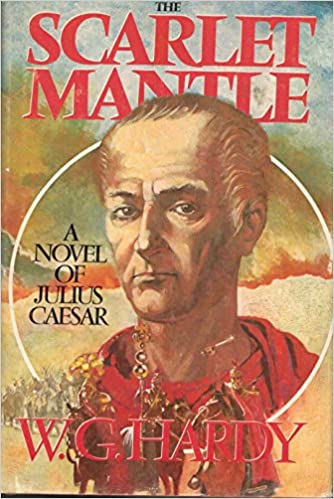
The Scarlet Mantel (1978)
The Bloodied Toga (1979, posthumous)
Anthologies:
Alberta Golden Jubilee Anthology (1955)
Alberta: A Natural History (1967)






 kawarthalakeswriters.com