Amy Terrill, a King Charles III Coronation Medal recipient for her contributions to Canada and her community, has been involved in political discourse throughout her career. A Political Science graduate from Queen’s University, Amy has spent time as a journalist, government relations specialist, and not-for-profit leader. Writing has been a constant pursuit.
No Secrets Among Sisters was inspired by a family history written by her Great-Aunt Frankie and her experiences working in a WWI Toronto munitions factory. This is Amy’s first work of fiction.
An avid reader, writer and traveller, Amy lives with her husband on a farm in Kawartha Lakes, Ontario.
Once at the top of her field, investigative reporter Amelia Collins has been struggling with the loss of her father. When her story exposing political corruption at the highest level is shelved, her temper erupts, putting her career in jeopardy at a moment when a rival is poised to take her place. As she deals with the fallout, she’s given a chance to run for federal politics. With just one weekend to decide on the course of her future, Amelia looks to her mother for guidance only to discover, before his death, her father left her a mystery to solve. A century earlier, her great-aunt walked away from a similar political opportunity despite encouragement from one of Canada’s best-known suffragists.
As Amelia digs through family archives to find out why Great-Aunt Frankie abandoned her political dream, she uncovers a web of violence, sudden disappearances and a mysterious fire that destroyed the Canadian parliament buildings.
No Secrets Among Sisters is a work of historical fiction set in Toronto in both World War I and current day; it highlights women’s continuing struggle for equality, representation and fair treatment in political spheres.
Jim Upton attended public school (Alexandra and Central Senior) and high school (LCVI) in Lindsay from 1958 to 1967. He currently lives in Montreal.
His novel, Maker, was published by Baraka Books in 2021. Sid Ryan, former president of the Ontario Federation of Labour, described Maker as “a fast-paced look inside the anatomy of a bitter strike in Montreal’s aerospace industry.”
Nicole Fortin is on the cusp of realizing a long-held dream when her life takes a sudden turn. Instead of participating in the Olympic Games, she finds herself struggling to master the challenging physical demands of her job in an aerospace plant and win the confidence of her male colleagues.
As her involvement in union activity deepens, she is drawn into the centre of a bitter labour battle that pits her workmates against their employer.
In the midst of this escalating confrontation, incidents from Nicole’s past threaten to destroy her credibility with her coworkers and her relationship with her daughter. Workplace and family ties become tangled and stretched to the breaking point.
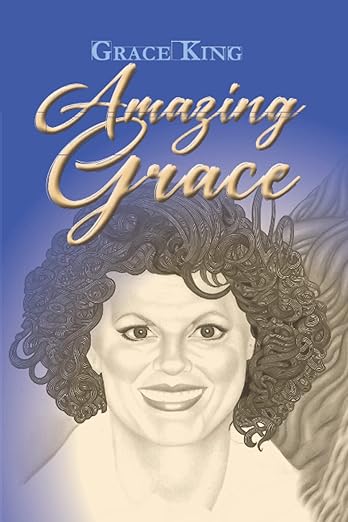
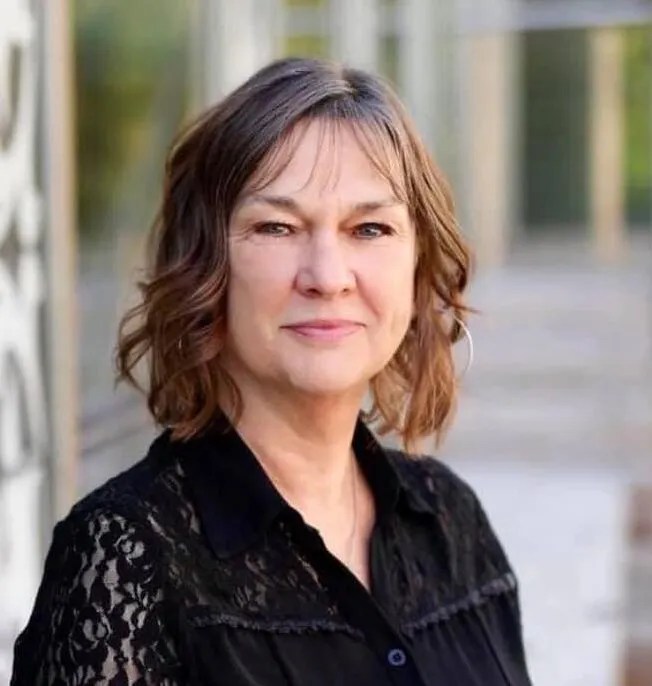
Grace King retired from the Ministry of Community Safety and Correctional Services in 2014. She has a wide range of skills and experience working within the private, public and not-for-profit sectors in volunteer management, program development and marketing. She volunteered for over 30 years for Tri-County Support Services, now Canopy Services.
In 2017, she completed a children’s book, proceeds from which she donated to the ALS Society, after her husband passed away from the disease (amyotrophic lateral sclerosis.) In 2022 she completed an autobiographical book in which she shared her challenges and successes along with tales about her relatives.
Winner of The Writers’ Union of Canada’s prose contest, Susan Wadds’ work has appeared, among others, in The Blood Pudding, Room, Quagmire, Waterwheel Review, Funicular, Last Stanza, and carte blanche magazines. The first two chapters of her debut novel, published by Regal House Publishing, “What the Living Do” won Lazuli Literary Group’s prose contest, published in Azure Magazine.
A graduate of the Humber School for Writers, Susan is a certified Amherst Writers and Artists (AWA) writing workshop facilitator.
As a settler married to an Ojibwe man with whom she has a son, Susan has been immersed in Indigenous culture and tradition for the past thirty years. She lives in Kawartha Lakes in the former Dalton township by a quiet river on Williams Treaty Territory in South-Central Ontario with an odd assortment of humans and cats.
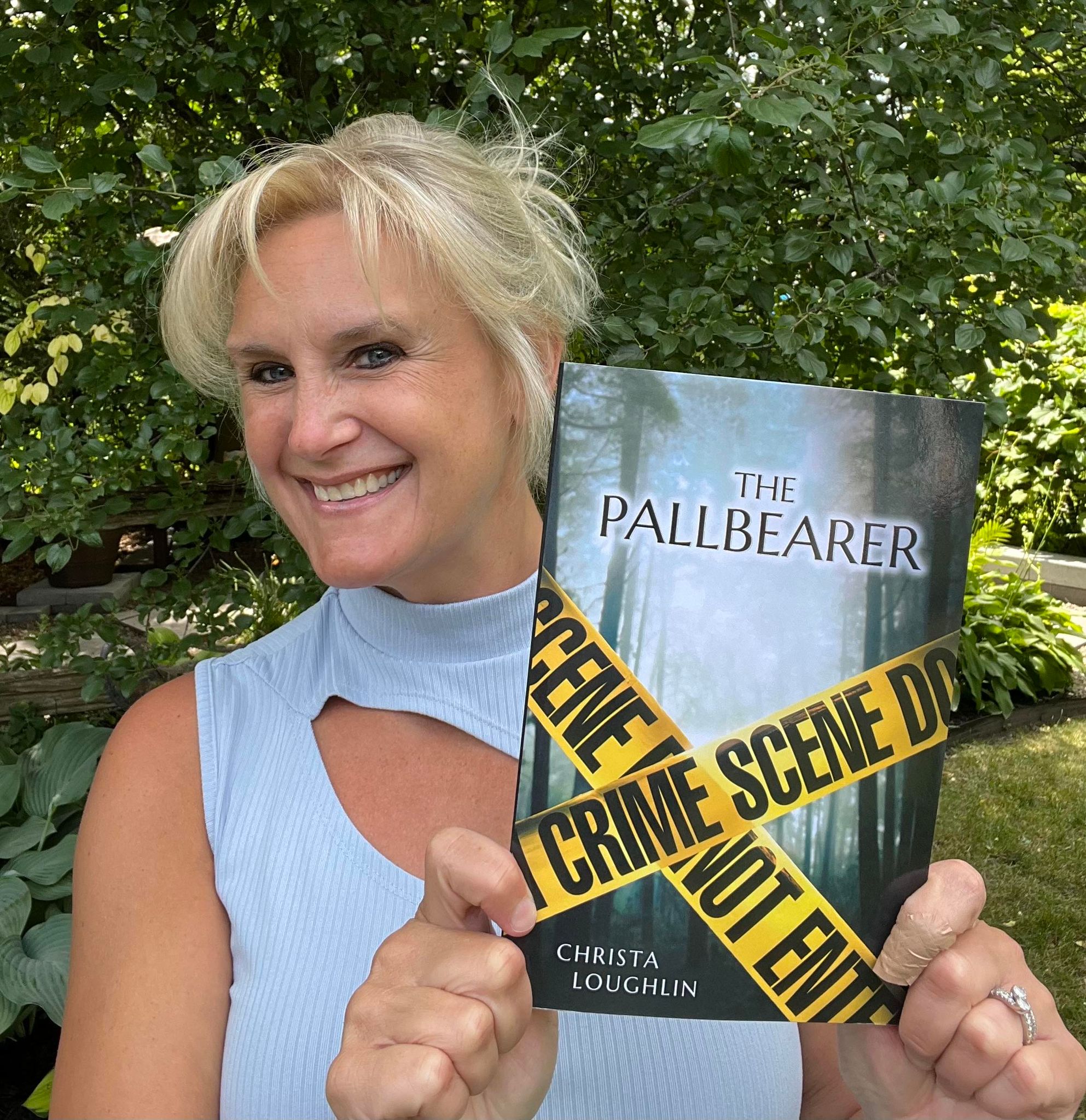
Christa Loughlin has always had a passion for crime fiction. She attributes that to having six police officers in her family and listening to their many stories over the years. As a result, she became familiar with the various aspects of policework including procedures and terminology. Christa’s love for murder mysteries grew even more through reading, watching, and listening to anything that left her trying to figure out the who’s and why’s of the story.
Christa had a 28-year career as a Registered Massage Therapist, with a large part of that time spent practicing in Little Britain, Ontario. She recently retired from massage therapy, and is living in Peterborough, Ontario with her husband, Paul, their cat, Scout, and their dog, Dexter—who is absolutely named after the serial killer.
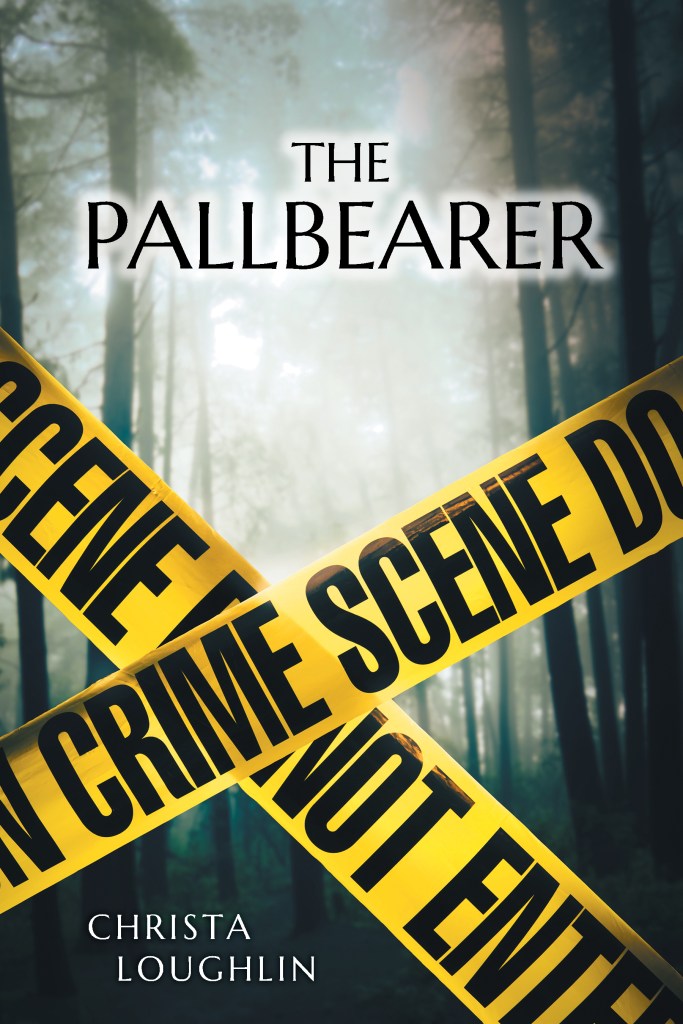
About the Book – Young women aren’t safe in Oshawa with a sadistic serial killer on the loose. Detective Sergeant Hannah Phillips is fierce and dogged as she tirelessly works to find out who is behind the abductions and murders of young women around the Ontario city. After one of the missing women is found alive, Hannah and her Durham Regional Police Service special task force, hope to finally solve the mystery and put a stop to The Pallbearer once and for all.
At the centre of the police investigation into the The Pallbearer is Matt Davidson, the son of a wealthy and renowned plastic surgeon. Matt continues to find himself on the wrong side of the law, being charged for criminal offenses multiple times in the past three years. He claims he is innocent and being framed but nobody—not even his father—believes him. When Matt’s charges are upgraded to murder, he finds an unlikely ally in Bobby Ross, a tenacious investigative reporter with a Toronto newspaper.
Meanwhile, Kelly Griggs awakens alone in a cold, dark room, held captive and tormented by the Pallbearer. She scrambles to find an escape before her captor exerts his twisted desires.
Slowly, dark secrets from the past are revealed, and the present becomes clearer. Can Hannah solve the mystery and save Kelly before it’s too late? Who is The Pallbearer?
Thomas Phillips Thompson (1843-1933) was born in Newcastle upon Tyne in England on 25 November 1843. He emigrated to Canada with his family in 1857. The family spent some time in Lindsay (appear on the 1861 census in Lindsay) before settling in St. Catharines.
Thompson studied law and was admitted to the bar, but instead became a journalist for the St. Catharines Post. He covered the Fenian raids as a correspondent for the Montreal Herald.
In 1867, he became a police reporter for the Toronto Daily Telegraph.
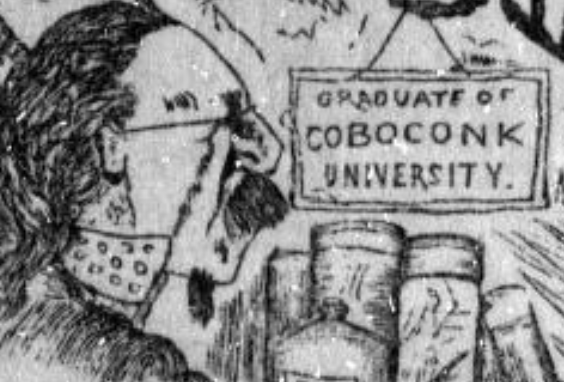
Around 1870, he wrote a weekly political column under the pseudonym “Jimuel Briggs, D.B., graduate of Coboconk University.”
The column was satire, making fun of the law and politics, and giving Thompson a name as a humourist.
In 1873, a collection of the columns was published as The political experiences of Jimuel Briggs, D.B., at Toronto, Ottawa and elsewhere. (D.B. stood for “Dead Beat.”)
Other fictitious local references in his columns include the newspapers (the Coboconk Irradiator and the Coboconk Progressionist), the Coboconk Reform League, and the Bummer’s Roost (a “most aristocratic hotel”.) As for real references, Thompson mentions the Toronto and Nipissing Railway as well as Laidlaw.
Note the purchase price on the cover: 5 drinks.
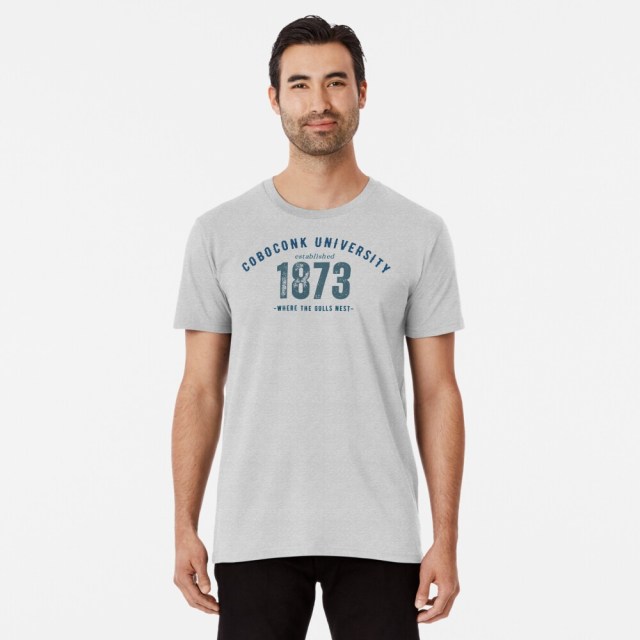
But “Coboconk University” wasn’t completely made up.
As it turns out, the old saw mill was locally known as “the university.” It burned down in June 1885.
The Canadian Post, June 12, 1885, p. 6.
On 2 February 1872, Thompson married Delia Florence Fisher. They had 3 daughters, Clara Florence, Laura Beatrice, Edith Maud and 1 son, William Phillips who died in childhood. Delia died in 1897. Two years later, Thompson married her sister, Edith, who was 13 years younger. In 1901, they had a son, Phillips Whitman.
Laura Beatrice Thompson married Francis George Berton. They had two children: Lucy Woodward and Pierre Berton. (Yes, that Pierre Burton.)
In 1874, Thompson helped found The National, a weekly journal that supported the Canada First movement.
By 1883, his career was flourishing. Thompson accepted an editorial position at the Toronto Evening News. During this time he began writing in the weekly journal of the Knights of Labor.
He died in Oakville on 20 May 1933, well-known as one of Canada’s most influential labour writers of the late 19th century.
Publications:
The Future Government of Canada: being arguments in favor of a British American independent republic, comprising a refutation of the position taken by the Hon. T. D’Arcy McGee in the British American magazine, for a monarchical form of government. (1864)
Originally from the Ajax area, where she graduated from the Ajax high school, O’Shea moved to Lindsay in 2020 and started her business, Let’s Talk Sex with Sandy.
In October 2022, O’Shea started a Facebook group for anyone to join “that would share activities they enjoyed, events that were happening, ideas for getting together.” (Whitnall. KLTW.) Within a few days the group had more than 200 members. (Visit the group: Kawartha Coffee and Conversation.)
O’Shea, a holistic sexpert, “specializes in supporting women through hormonal changes from perimenopause to menopause and beyond, helping them manage stress and embrace their confidence and sexual power. For men, she offers guidance on stress management and erectile dysfunction. Sandy is also passionate about helping couples reconnect and reignite the passion and intimacy they once shared.”
In February 2023, O’Shea published her first work of fiction, When Friends Become Lovers. The erotic story follows Nancy as she embarks on a new relationship after two failed long-term relationships.
O’Shea is working on her forthcoming memoir, From Invisible to Technicolor.
Viola Leone Whitney (1892-1984) was born in Atherley, Ontario on 23 February 1892. She completed grade eight when she was eleven and graduated Orillia Collegiate at age 15. Too young to attend university, she stayed home and studied music until she tired of it. She turned to teaching and was employed in Zephyr. She entered Victoria College at the University of Toronto in 1909, where she was editor of the student literary journal, graduated in 1913, she attended the Ontario College of Education and then went on to teach in Amherstburg, Renfrew and St. Mary’s.
From 1920 to 1936, the Pratt family kept a cottage in Bobcaygeon on Sturgeon Lake, where the family spent their summers.
Viola was a founding member and editor of World Friends, a magazine for children published by the Women’s Missionary Society of the United Church of Canada. She retired from her editorial position in 1955.
In the 1930s, Viola was president of the Canadian Authors’ Association.
She read to blind students at the University during and after the Second World War.
She wrote book reviews for the Globe and Mail.
Viola was an essayist and public speaker. These were collected and published in a book edited by her daughter Claire Pratt, Viola Whitney Pratt: Papers and Speeches (1990.)
In 1956, Viola was awarded an Honourary Doctorate of Sacred Letters from Victoria University.
Publications:
World Friends
One Family (1937)
Famous Doctors (1956)
Journeying with the Year: a world friends anthology, Women’s Missionary Society of Canada (1957)
Further Reading:
Viola Whitney Pratt: papers and speeches (1990), Claire Pratt.
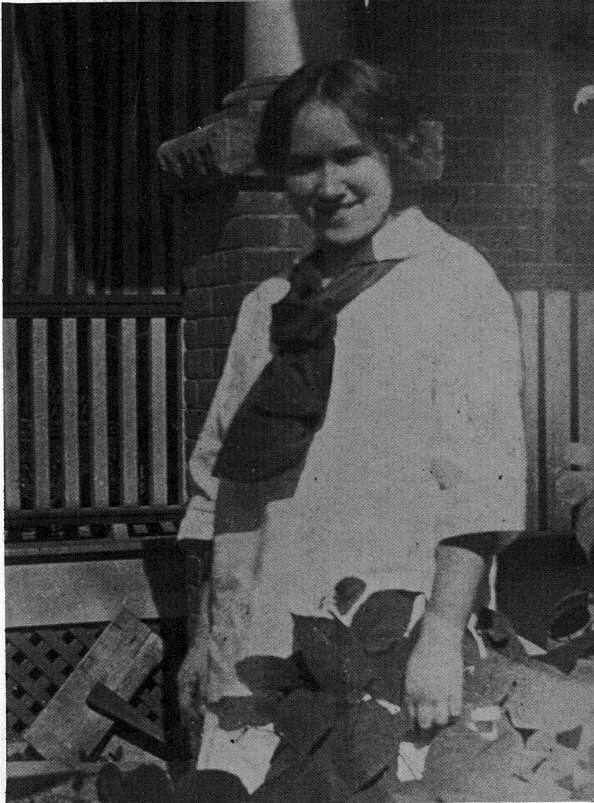
Born Clara Flos Jewell (1889-1970) in Dundalk, Ontario, she completed school in Toronto, where at some point she preferred to use the name Flos as she’s listed in the newspaper honour rolls as Flos Clara Jewell.
At some point, she took a teaching position in Bobcaygeon, where she taught for at least five years.
Dorothe Comber‘s book, “Bobcaygeon History: Amy Ellen Cosh Memorial,” has this note in the section about the Rokeby School:
Miss McGuire taught in the Rokeby School. She was a lovely person and a splendid teacher. She and Mr. Simpson were united. Miss Floss [sic] Jewell was one of the assistants. About 1920, after she had gone away and married, she wrote a fiction story about Bobcaygeon which was published, “The Judgement of Solomon.” Of course the names were changed but some people thought that they recognized some of the characters.”
Bobcaygeon History: Amy Ellen Cosh memorial, Dorothe Comber with committee, 1972, page 72.
The December 3rd, 1908 edition of the Weekly Free Press notes, “Upon severing her connection with Rokeby school, Miss McGuire was presented with some valuable silverware by her pupils and ex-pupils in remembrance of her kindness and interest in their welfare.”
McGuire left in 1908. The 1911 census shows Flos single and living in Toronto.
Flos and David were married on 23 April 1915, therefore Williams must have taught at the Rokeby School between 1911 and 1915. The phrasing “gone away and married” would suggest that just like McGuire, Flos quit teaching to get married, but since she ran into E.J. Pratt, Arthur Phelps and others while she was in Bobcaygeon, and knew them well enough to characterize them into her first novel, she had to have remained living in the area until at least 1920.
The former Rokeby School. Image captured by Google May 2018.
The Rokeby School was the Verulam School Section (S.S.) No. 6 built in 1873 to move students out of the tavern lean-to where they’d been studying. (The school in the make-shift room attached to the tavern is thought to be Bobcaygeon’s oldest school.) The Rokeby School was constructed at 35 North Street, which became Pieter van Oudenaren’s Garage, an auto repair shop. Pieter took over the garage from his father, Harry van Oudenaren, a Kawartha Lakes author, until he left auto repair for cheesemaking.
By 1921, according to the 1921 census, Flos and David were living in Calgary.
After settling in Calgary, being separated from her Toronto-area friends and family, and with her salesman husband travelling, Williams took up writing. She was a member of the Canadian Authors Association, in the same Calgary chapter as Nellie McClung. In addition to writing four novels, Williams contributed a number of stories and poems to anthologies and periodicals to qualify for membership to the Canadian Womens’ Press Club.
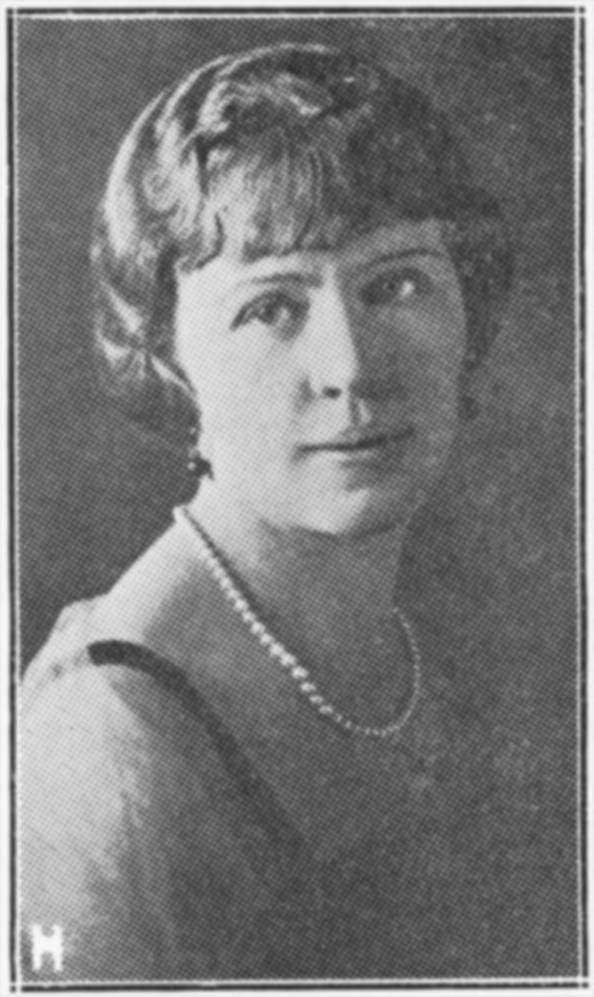
A young woman and a brilliant one, and editors and critics who know her work prophesy that she will go far in the world  of letters. The very fact that this first book of hers was one of the runners up in the recent Hodder & Stoughton Canadian $2,500 contest, that this well established firm accepted it at once and sent it forth to the world, stamped with its approval, is no mean compliment to a young and new writer.

Mrs. Williams didn't write her book as one in search of fame, for commercial purposes, or in the beginning for the publishers. Once  the theme was conceived it was written, four thousand  words at a time, for the real enjoyment of writing, until it had developed itself into a full-length novel. It is a story that arose first in the heart and was committed to paper because of  that prime requisite of any author — the urge to write. It had never been seen by anyone. Then one day Mrs. Williams saw the advertisement of the Hodder & Stoughton contest. She submitted her manuscript, curious to see  how it  would come out. Immediately there came back a letter of warm commendation accompanied by an offer to publish it. It had been picked as one of the four runners up in the contest.

Mrs. Williams was born in Toronto [Dundalk] and educated in that city, being a graduate of the Jarvis Collegiate Institute, the old grammar school of Upper Canada, and of the Toronto Normal School.  Later she taught at Bobcaygeon in the Kawartha Lakes district, which she has woven in, as the beautiful setting of her book. Six years ago she came with her husband, David S. Williams, and her twin sons, to reside in Calgary, in which city her book was written.
“Calgary has four women authors” by Elizabeth Bailey Price; Canadian Bookman, March 1926.
The Globe review for Judgement of Solomon called the book “a well-written novel” with “a real plot, not a particularly pleasant one, handled with skill and delicacy and well sustained to the end.” (The Globe, December 5, 1925.)
The Judgment of Solomon is a work of fiction, following the story of Blake Lamon during his days as a medical student at the University of Toronto. He leaves school to run the family farm, acting on the promise he made to his dying mother. He marries Mary, the girl next door, and then has an affair with his wife’s cousin, Anne Thurston (a girl of 18 who’s living with them as their housekeeper). Anne gets pregnant, and Blake dies before his son, Blake junior, is born.
The setting for the family farm was “a four-mile drive over wretched roads, from Robson” with Robson being the pseudonym for Bobcaygeon, a place the main character, Blake Lamon does not love.
Blake hated the gossip and scandal-mongering of small villages, the almost consistent lack of charity, the eagerness with which the inhabitants put the worst construction on the actions of their neighbours. Robson was particularly disgusting in this respect. The town was situated between two lakes. A river and a canal cut through the town. On every side was unusual beauty, and the little village, with its ugly houses, with their wedding-cake verandahs jammed close to the sidewalks, buzzing from morning until night with scandal, was to Blake like a festering sore on the beautiful landscape.
The Judgment of Solomon, 1925, page 54.
By this description Robson is undoubtedly Bobcaygeon. When Blake marries, he agrees to move into his wife’s neighbouring farm, called Beehive Farm. This must be a nod at ‘The Beehive’ home to James Dunsford, built in 1839 between Bobcaygeon and Fenelon Falls, now part of Eganridge Resort, Golf and Spa.
Mary’s verandah commanded a gorgeous view of Sturgeon Lake, whose waters washed all the western boundary of the farm, its wooded shores curving around Green Bay, the favourite haunt of black bass for which the lake was famous.
The Judgment of Solomon, 1925, page 36.
Green Bay is on the Pigeon Lake side of Bobcaygeon, just off Riverside Drive, while The Beehive is on Sturgeon Lake at Hawkers Bay. Familiar territory, in any case.
After Blake’s death, Anne stays with Mary to help raise Blake Junior, whom they are raising as Mary’s child. Outside of Anne and Mary, only the doctor knows the truth. Once Junior is old enough to go away to school, Anne moves to a place of her own in Robson.
While she’s living in Robson, Anne meets some familiar characters. For anyone who knows that E.J. Pratt, Arthur Phelps, and Frederick Philip Grove spent every summer at their cottages in Bobcaygeon, they would instantly recognize them in the characters “Ned Andrews,” “Arthur Dawson,” and “George Groves.” Anne suddenly finds that “for the first time in her life this lonely woman felt that she was among her own people.” (p. 245.)
And they seem to respect her:
Ned Andrews marvelled at this women. She confessed to having lived almost entirely to herself, yet she had the appearance, the poise, of a woman of the world. She unhesitatingly acknowledged that she had been a housekeeper on a farm, yet good breeding and refinement were obvious.
The Judgment of Solomon, page 255.
Williams would have been a solitary woman, living on her own, while her salesman husband was away. Williams seems to have made herself the template for Anne.
Ned is a bachelor, whereas, E.J. Pratt was married. Nevertheless, Pratt was the template for Ned. Here’s Ned as described by another character:
“He is a Newfoundlander: a long, thin, good-looking, loose-jointed man, rather shabbily dressed. The cleverest man on the staff, with an almost uncanny ability in using his knowledge. He impresses one as living intensely every instant. He is much interested in questions of the day, and has influence in high quarters that would amaze the majority of his friends. Add to that the fact that he writes the most beautiful poetry in Canada to-day, and that he is a confirmed bachelor at forty, and you have the man.”
The characters ask to hear Ned’s poem titled, “Charlotte.” Is it coincidence that Pratt had a sister named Charlotte? Or that his first published poem had a woman’s name for the title? (Rachel, published in 1917.)
In the book, Anne and Ned fall in love, but Anne is unwilling to commit because of her history with Blake and because Blake Junior hasn’t fully accepted her as his mother.
During her time in Kawartha Lakes and as a member of the Canadian Authors Association, Williams became known to these “Bobcaygeon Boys.” Phelps, Pratt, and William Arthur Deacon had cottages where they stayed every summer, after completing their professor duties at the universities.
Two of Williams’s books were published by Graphic when Frederick Philip Grove was editor. Grove was friend to the Bobcaygeon Boys, spent time at their cottages, and corresponded with them on a regular basis. Graphic also published the words of Grove, Deacon, and Watson Kirkconnell (another Kawartha Lakes writer and Phelps’s colleague.) Deacon was a well-known book reviewer and critic for Saturday Night and the Globe and Mail, where Williams’ books were reviewed.
In 1926, Deacon asked Pratt to review Williams’s novel, New Furrows, for the Globe and Mail. In his letter to Deacon, Pratt said, “I had this review up to four hundred words but by a second pruning I managed to get it down to 335. I hope it will do though I don’t think it is ‘any great shakes,’ as I can only accomplish anything worth while when I have the impulse to let myself go.” (https://www.trentu.ca/faculty/pratt/letters/texts/260909dea.html)
His review was lukewarm at best. The review appeared in the October 16, 1926 edition and started out well with Pratt calling the book “a refreshing change from the usual run of “Western” novels.” After describing the premise of the book, Pratt says, “Beyond the love affair which develops between Marie and a handsome English “mountie,” the book has little plot. Nor are the obstacles to the courses of true love more than ordinary complexity–the war, absence, misunderstanding and hurt pride account for them.” He then goes on to say the value of her story “lies largely in the simplicity of its telling” and that “Mrs. Williams has not hesitated to make her people her mouthpiece on many vexed questions.” He ends the review not with words for the story itself, but by describing the book as “an attractive piece of book-making, done in the distinctive style of the Graphic Publishers.” Deacon was at the time editor for the Globe and Mail, and their friend Grove was editor at Graphic Publishers. Pratt’s evaluation of the novel would have carried a lot of weight.
Although he must have been flattered to be a character in Williams’s first book, he clearly reverted back to his default belief that women’s fiction wasn’t worthy, and one shudders to think what he might have said had he been able to “let himself go.” Perhaps he wasn’t flattered by Williams portrayal of him at all.
Williams was well-connected to the literary world in another way. Her salesman husband’s travelling partner was Stephen Leacock’s brother. (Butter Side Up, Gray Campbell, 1994.) No doubt she heard plenty of amusing tales.
In 1931, Williams had three books published along with short stories and poems, when her story “The Blue Bowl” was picked up for Chatelaine. The editor contacted her, asking for a photo and a brief write-up of her career to include with the story. Her response shows that imposter syndrome is not a modern construct and that for mothers, writing is a challenging career:
“Your letter fills me with despair for two reasons. First it reminds me of the time I asked an old Indian squaw to let me take her snapshot for a quarter, and she knocked the money out of my hand, saying that she wouldn’t be ugly all over Canada for a quarter! And second, because in the matter of my career- I haven’t had one!”
“I taught school in Toronto, married and have twin sons. My sons are my chief hobby as well as being my greatest creative effort. I have no convictions about anything- or rather I have to have a fresh bunch daily. To such an extent is this true that the only time I ever wrote a letter to a newspaper, I had to write an answer the next day, refuting all my arguments.”
Chatelaine, November 1931.
Her last novel, Fold Home, took second place in Ryerson’s Annual Canadian Book Contest in 1949.
Butter Side Up by Gray Campbell (1994) tells the story of the founding of his publishing company, Gray Publishing, the first publishing company in British Columbia. At the time, Williams was retired and living on her own on the waterfront a few houses down from Campbell. In his book, Campbell describes her as a “wise old owl” and “a witty raconteur, very much in tune with current literature and state affairs.” He began bringing her manuscripts to evaluate. He says “as a retired novelist, she had the ability to size up a writer’s potential by reading a few pages.” And while he acknowledges his company wouldn’t have succeeded if not for Williams, he makes no mention of paying her for her work.
A director, actor, author, and teacher, Rod Carley was born in Brockville, Ontario, on February 19, 1962. He attended York University, graduating with a B.F.A. (Honours) in Acting/Directing (1985) and graduated the Humber School for Writers (2013). (link)
His second book, Kinmount, won the Silver Medal for Best Regional Fiction from the 2021 Independent Publishers Book Awards and was one of ten books long-listed for the 2021 Leacock Medal for Humour. (link) The story is about down-and-out director Dave Middleton, who feels Kinmount is the last place he wants to revisit yet there he is directing an amateur production of Romeo and Juliet for an eccentric producer. From cults to karaoke, anything that can go wrong does.
In choosing to use Kinmount as the setting for this book, it would seem Carley took a page from Gord Downie, but where Downie chose Bobcaygeon from a map because it rhymed with ‘constellation’, Carley chose Kinmount because “”the name was naturally funny,” Carley says, noting the word Kinmount contains a noun followed by a verb. “With apologies to the good people of Kinmount,” he adds, noting a similar apology appears in the book itself. Aside from the name and some reference to a history of logging, Carley says the Kinmount in his story is otherwise fictionalized.” (link)











 kawarthalakeswriters.com
